Key facts: Smoke Damage Cleanup
- Smoke residue spreads well beyond the burned room; it follows air currents into closets, attics, ducts and wall cavities.
- Dry soot sponges are used before any wet cleaning, because water can push oily or fine residue deeper into paint and plaster.
- The ANSI/IICRC S700 standard covers fire and smoke assessment, source removal, HVAC systems, odor management and contents.
- The EPA warns that ozone generators sold as air cleaners can irritate the lungs and do not remove most indoor pollutants.
What smoke does
Why smoke damage reaches rooms the fire never touched
Smoke is a moving mixture of hot gases, aerosols and solid particles. While a fire burns, it heats the air around it, and that warm, particle-laden air rises and pushes outward through every opening it can find: hallways, stairwells, return-air grilles, gaps around recessed lights, the space under doors and the open tops of interior walls. As it moves, it cools, and as it cools the particles and oily vapors drop out and stick to cooler surfaces. That is why the inside of a closet two rooms away, the back of a picture frame or the top of a door can be coated even though nothing nearby burned.
Restoration crews call this pattern "smoke migration". It explains most of the surprises people meet after a fire. Exterior walls and ceilings tend to collect more residue than interior ones because they are cooler. Fabrics and carpet act like filters and hold particles deep in the fibers. Electrical outlets on exterior walls often show dark lines around the cover plate where air was drawn in. Even a fire that the Colorado Springs Fire Department put out in minutes can leave a fine film through the whole floor above it.
Smoke damage cleanup is the work of finding where that residue went, identifying what kind it is, and removing it in an order that does not make it worse. It is different from rebuilding burned framing and different from the soot removal needed on heavily blackened surfaces, though most jobs include some of each.
Warning signs
Signs smoke has spread further than you think
Shadow lines on walls
Faint gray outlines of furniture, frames or shelves on painted walls mean residue settled around objects. The clean outline shows how much is on the rest of the wall.
Dark rings at outlets and vents
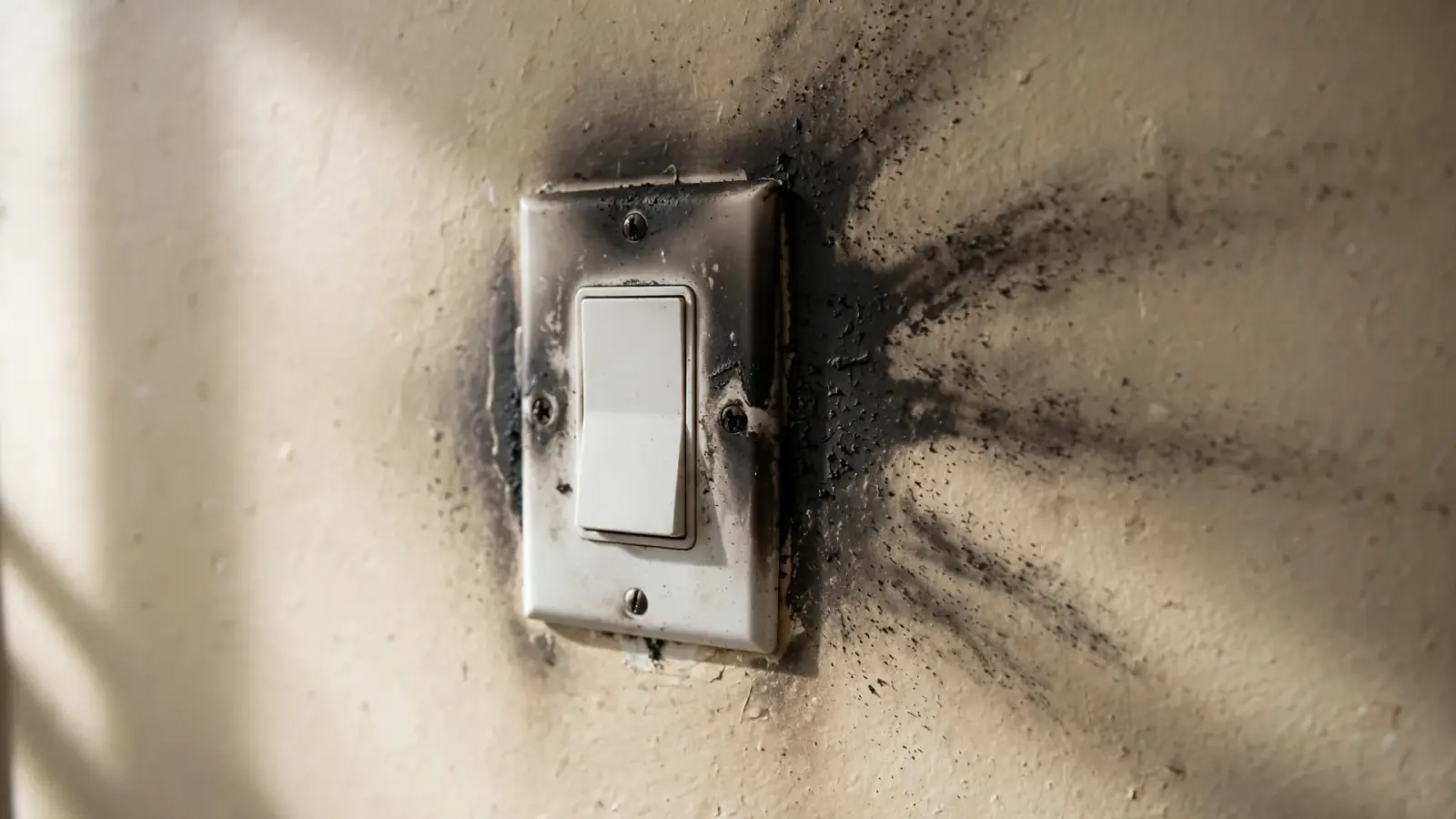
Gray or black edges around outlet covers, light switches and return grilles show where smoky air was pulled through wall cavities or ducts.
Film on windows and mirrors
A hazy, slightly greasy film on glass that smears when wiped is typical of residue from burning plastics and kitchen fats.
Yellowed ceilings or trim
A yellow or brown tint, especially near the ceiling, often comes from protein residue in kitchen fires and can bleed through paint later.
A smell that returns
Odor that fades with the windows open and comes back when the house is closed or the furnace runs points to residue in fabrics, ducts or cavities.
Discolored metal and grout
Chrome fixtures, appliance handles and grout can pit or stain within days because some residues are acidic.
Residue types
Four kinds of smoke residue, and why the difference matters
Not all smoke leaves the same deposit. What burned, how hot the fire ran and how much oxygen it had decide the residue, and the residue decides the cleaning method. A good assessment names the residue type room by room before anyone starts wiping, because the wrong first step can lock residue in place.
Dry, powdery residue comes from fast, hot fires burning wood and paper. It sits loosely on the surface and lifts well with dry methods. Wet, smeary residue comes from slow, smoldering fires burning plastics, foam and synthetic fabrics at lower temperatures; it is sticky, dark and smears if you touch it. Protein residue comes from burning food, often on a stovetop; it is nearly invisible, yellowish, and carries a sharp, persistent odor that clings to cabinets and paint. Fuel or oil residue comes from petroleum products and is dense and difficult. Wildfire smoke adds a fifth pattern: very fine ash and char particles carried in from outside, sometimes with almost no visible film but a strong smell.
Most house fires produce more than one type. A kitchen fire that spreads to a sofa can leave protein residue in the kitchen, wet smeary residue in the living room, and a fine dry layer upstairs. The crew handling your home should be able to point to each type and explain why the method changes between rooms.
Residue guide
How common smoke residues look and how they are usually cleaned
| Residue | Typical source | What you see or smell | Usual first approach |
|---|---|---|---|
| Dry, powdery | Hot, fast fire burning wood or paper | Gray to black dust that lifts easily | Dry soot sponge and HEPA vacuuming before any liquid |
| Wet, smeary | Smoldering plastics, foam, synthetics | Sticky black film that smears when touched | Solvent-based or specialty cleaners after testing a small area |
| Protein | Burned food on a stove or in an oven | Yellowish film, strong sour odor, little visible soot | Degreasing cleaners, repeated passes, often sealing before paint |
| Fuel or oil | Petroleum products, furnace puff-back | Dense dark film, heavy smell | Specialty cleaners; some materials are replaced |
| Wildfire smoke and ash | Fire outside the house | Fine ash on sills and floors, odor in fabrics and ducts | HEPA vacuuming, damp wiping, filter changes, duct and fabric cleaning |
Assessment
How a smoke damage assessment is done
- 1
Safety check first
The contractor confirms the fire department has released the house, that power and gas are safe, and whether anything structural, electrical or hazardous needs a specialist first.
- 2
Map the spread
They walk every room, including closets, the attic and the basement, noting where residue is heavy, light or absent, and how air moved through the house.
- 3
Test the residue
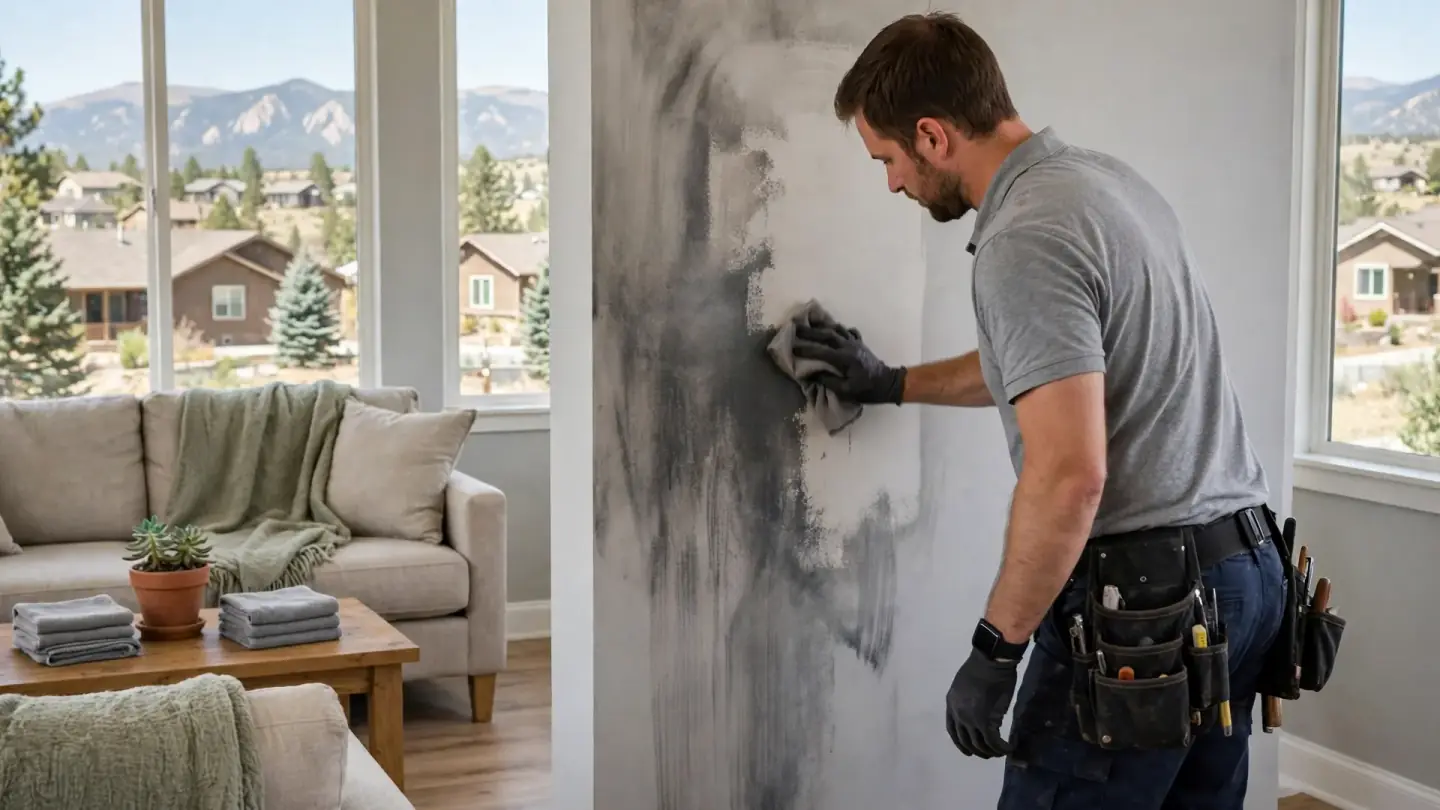
A dry chemical sponge is wiped across walls and ceilings in each area. How much comes off and how it smears identifies the residue type and shows how far it reached.
- 4
Check hidden pathways
Return grilles, the furnace filter, outlet boxes on exterior walls and the attic insulation are checked, since these often hold residue the living spaces do not show.
- 5
Separate clean, restore and replace
Contents and materials are sorted into what can be cleaned in place, what should be packed out and cleaned elsewhere, and what is not worth restoring.
- 6
Put the scope in writing
A written scope with photos lists each room, residue type and method. This is also the document your insurance adjuster will compare against their own notes.
The cleaning
What smoke cleanup involves, from air to surfaces
Cleanup usually starts with the air, not the walls. Crews set up air scrubbers, which are portable machines that pull room air through HEPA filters, to capture fine particles that would otherwise settle again as people work. Doors to clean parts of the house are closed or sealed with plastic so residue is not tracked from the damaged area into rooms that were fine.
Next comes dry removal. Loose residue is vacuumed with HEPA-filtered equipment and wiped with dry soot sponges, which are made of vulcanized rubber and pick up particles without water. Only after the dry pass do technicians move to wet cleaning with detergents or solvents chosen for the residue type, testing a small spot first. Ceilings are cleaned before walls, and walls before floors, so that nothing drips onto a finished surface.
Hard surfaces such as cabinets, countertops, fixtures and appliances are cleaned and, where residue is acidic, cleaned quickly to stop etching. Porous materials, including drywall paper, unfinished wood and acoustic ceiling texture, sometimes cannot be cleaned completely; in that case the scope usually calls for cleaning followed by a sealing primer, or for replacing the material. Fabrics, rugs and clothing are handled separately through contents cleaning, and lingering smell is treated through odor removal once the residue causing it is gone.
The national industry standard for this work, ANSI/IICRC S700, organizes the job the same way: assessment, documentation, source removal, HVAC, odor management, contents and a final evaluation. [1] Asking a contractor how their plan follows those steps is a reasonable way to judge whether the cleanup is thorough or cosmetic.
Materials
How different materials respond to smoke
- Painted drywallFlat paint holds residue more than satin or semi-gloss. Light residue cleans off; heavy or protein residue usually needs cleaning, a sealing primer and fresh paint.
- Textured ceilingsPopcorn and knockdown textures trap particles and cannot be scrubbed. In older homes they are tested for asbestos before anyone disturbs them. [6]
- Wood trim and cabinetsFinished wood cleans well if done promptly. Raw wood inside cabinets absorbs odor and is often sealed after cleaning.
- Carpet and padCarpet can often be cleaned after light smoke. Heavy residue, water from firefighting, or odor in the pad usually means replacing the pad at least.
- Upholstery and drapesFabrics filter smoke from the air. They are usually cleaned off-site with methods matched to the fiber.
- ElectronicsResidue can corrode circuit boards. Electronics should be unplugged and checked by someone qualified before use.
Ducts and the furnace
When the heating system spreads smoke for weeks
In Colorado Springs most homes run a forced-air furnace for much of the year. If the system was running during a fire, or if wildfire smoke was drawn in from outside, the return ducts, blower and filter can hold residue that is spread through the house each time the furnace cycles. That is one of the most common reasons a smell keeps coming back after the rooms themselves were cleaned.
A smoke cleanup scope should say what will happen to the HVAC system. At minimum that means replacing the filter and inspecting the return side and blower. When residue is present inside ducts, cleaning them is part of smoke cleanup rather than an optional extra, and the system should stay off, or run only with a fresh filter, until it is done. If your furnace or water heater was near the fire, have it checked before relighting; burned wiring or damaged venting can create a carbon monoxide risk.
What you can do
Safe steps while you wait for a contractor
- Get the fire department's release before re-entering, and keep children, pets and anyone with asthma or heart conditions out of smoky rooms.
- Open windows on a dry, still day to ventilate, unless outdoor air is smoky from a wildfire; in that case keep windows closed and run a portable HEPA air cleaner. [2]
- Change the furnace filter and set the thermostat fan to off until the ducts have been checked.
- Photograph every room, including closets and the inside of cabinets, before anything is moved or cleaned.
- Move undamaged valuables, documents and medicines to a clean room or out of the house in sealed bags.
- Wear disposable gloves and a well-fitting N95 respirator if you must handle items covered in residue. [4]
- Remove perishable food that was exposed to heat or smoke, and empty the refrigerator if power was off.
DIY or professional
Which smoke jobs a homeowner can handle
| Situation | Reasonable for a homeowner? | Why |
|---|---|---|
| Light dusting of dry residue on a few hard surfaces | Often yes, with a dry soot sponge and gloves | Dry residue lifts cleanly if no water is used first |
| Film on most walls of a room or floor | No | Even pressure and the right sequence prevent streaks and staining |
| Protein residue after a kitchen fire | Rarely | Residue is nearly invisible and odor stays unless every surface is degreased |
| Smell coming from vents | No | Requires inspecting and cleaning ductwork and the furnace |
| Smoky clothes and linens | Partly | Some washable items clean at home; delicate, heavily affected or valuable items need specialist cleaning |
| Older home with textured ceilings | No | Materials may contain asbestos or lead paint and must be tested before disturbance |
Health and safety
Health concerns with smoke residue and ash
Residue from a house fire is not ordinary dust. Burned plastics, foams, wiring and finishes release a mix of chemicals, and the finest particles can stay airborne and be inhaled. The EPA advises people cleaning up after a wildfire to avoid stirring up ash, to wear a properly fitted respirator such as an N95 rather than a cloth mask, and to use HEPA-filtered vacuums rather than ordinary ones. The same caution is sensible after a structure fire.
People with lung disease, heart disease, older adults, pregnant people and children are the most sensitive to smoke and fine particles, and they are the ones who should stay away from the house while cleanup happens. If anyone develops coughing, headaches, dizziness or shortness of breath while in the home, leave and get fresh air. Is it safe to stay after a fire? covers the decision in more detail.
Homes built before 1978 may have lead-based paint, and older textured ceilings, flooring and insulation may contain asbestos. [5] Cleaning that sands, scrapes or demolishes those materials is regulated work. Ask the contractor how they will test for and handle these materials before cleaning begins.
Colorado Springs specifics
What is different about smoke cleanup in Colorado Springs
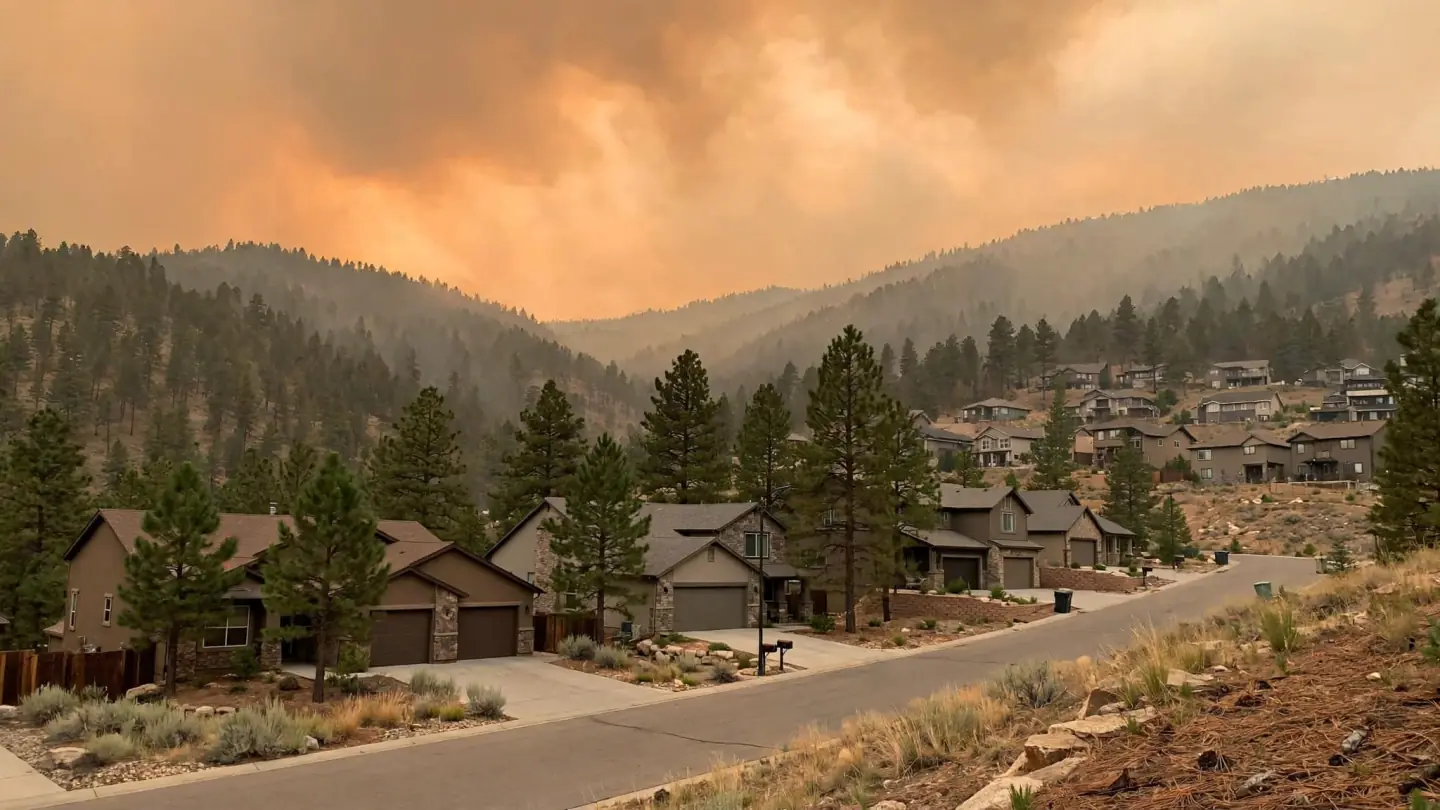
Three local conditions shape smoke cleanup here. The first is wildfire. The city's fire department maps a large wildland-urban interface along the foothills on the west and south sides, and fires such as Waldo Canyon in 2012 and Black Forest in 2013 sent smoke across neighborhoods that never saw flames. [7] Wildfire smoke cleanup has its own page: wildfire smoke damage.
The second is dry air. The Pikes Peak region is semi-arid, so fire debris dries quickly and becomes fine, mobile dust. That helps with water from firefighting, which dries faster than in humid cities, but it also means loose ash and soot are easily stirred up and carried through the house. Air filtration during work matters more, not less.
The third is the housing stock. Colorado Springs ranges from 1890s Victorian houses in the Old North End with plaster walls and wide wood trim to newer houses on the east side with drywall, carpet and open floor plans. Plaster tolerates careful wet cleaning better than drywall paper, while open-plan houses let smoke spread through the whole main level at once. Repairs beyond cleaning generally need building permits from the regional building department, and your contractor should explain which apply.
Insurance
Documenting smoke damage for an insurance claim
Smoke damage is often under-recorded because it is harder to see than char. The most helpful thing you can do is photograph and list affected rooms before cleaning begins, including closets, the inside of drawers and the attic if you can reach it safely. Note smells as well as visible film, and keep any receipts for items you buy because the house is not usable.
Ask the restoration contractor for a written scope that lists rooms, residue types and methods. Adjusters work from documentation, and a clear scope helps both sides agree on what is needed. Working with your insurance adjuster explains how to prepare for the adjuster's visit and what to ask.
Restore or replace
When cleaning is enough and when materials should go
The decision to clean or replace is based on the material and the residue, not on how dirty something looks. Hard, non-porous surfaces such as glass, metal, sealed stone and finished wood can usually be cleaned. Porous materials that have absorbed residue, especially from smoldering plastic fires, may keep releasing odor even after careful cleaning. In those cases, sealing with an odor-blocking primer or replacing the material is more reliable than repeated cleaning.
Ask the contractor to explain their reasoning item by item, and to show you test results. A good restorer can tell you which items are being restored and why, and which are being replaced and why, and will photograph both for your records.
Related problems
Problems that often show up alongside smoke damage
Smoke damage rarely arrives alone. Firefighting water soaks drywall, insulation and subfloors, and in a closed house that moisture can lead to mold within days; that is handled through water damage from firefighting. Broken windows, vented roofs and forced doors leave the house open to weather and intruders, which is why board-up and tarping often comes first. Heavy black deposits near the fire are a separate job covered on the soot removal page.
Odor is the problem people notice longest. If a smell persists after cleaning, the guide smoke odor that won't go away walks through where it usually hides.
Prevention
Lowering the chance of smoke damage next time
Most house fires start in the kitchen, and most smoke damage is worse when a fire burns unnoticed. Working smoke alarms on every level and in sleeping areas, a kitchen fire extinguisher, and never leaving cooking unattended are the basics NFPA and Ready.gov recommend. For wildfire smoke, the EPA suggests preparing a clean room with a portable HEPA air cleaner and upgrading the furnace filter to the highest rating your system can handle.
In the wildland-urban interface, the city requires ignition-resistant construction for new building, and residents can look up wildfire risk for an address. Reducing fuel near the house and screening vents lowers the chance that embers ignite the structure, which is the main way homes are lost in wildfires.
FAQ
Smoke damage cleanup questions
How long does smoke damage cleanup take?
It depends on how far smoke traveled and the residue type. Light smoke in a few rooms may take a few days. Whole-house cleanup with duct work and contents cleaning can take several weeks. The contractor should give you a room-by-room schedule after the assessment.
Can I stay in the house during smoke cleanup?
Sometimes, if the damage is limited and the work area is sealed off with plastic and air scrubbers. People with breathing or heart conditions, young children and pets are better staying elsewhere until cleaning is done.
Does painting over smoke damage work?
Not by itself. Paint applied over residue can peel and the stain and smell often bleed through. Surfaces are cleaned first, then sealed with a primer made for smoke and odor, then painted.
Will my homeowners insurance cover smoke damage?
Many policies cover sudden smoke damage from a fire, but coverage, limits and deductibles vary. Read your policy, report the damage promptly and document it before cleaning. Your adjuster is the person who confirms coverage.
Why does my house still smell after the walls were cleaned?
Odor usually comes from residue that was not reached: inside ducts, under carpet pad, in attic insulation, in closets or in fabrics. A follow-up inspection of those areas usually finds the source.
Is wildfire smoke damage handled differently?
Yes. It usually involves fine ash and odor throughout the house with little visible film, so the work focuses on HEPA vacuuming, filters, ducts and fabrics. See the wildfire smoke damage page.
Is it safe to run the furnace after smoke damage?
Not until the filter is replaced and the system has been checked. Running it can spread residue through every room. If the furnace was near the fire, have it inspected before relighting.
Can smoke damage electronics?
Yes. Some residues are corrosive and can damage circuit boards over time. Unplug electronics and have them checked before using them.
Sources and citations
- [1]IICRC — ANSI/IICRC S700 Standard for Fire and Smoke Damage Restoration
- [2]U.S. EPA — Wildfires and indoor air quality
- [3]U.S. EPA — Ozone generators that are sold as air cleaners
- [4]U.S. EPA — Wildfires
- [5]U.S. EPA — Lead Renovation, Repair and Painting Program
- [6]U.S. EPA — Protect your family from exposures to asbestos
- [7]City of Colorado Springs — Wildland-urban interface construction requirements
- [8]NFPA — Home fire safety
- [9]Ready.gov — Home fires