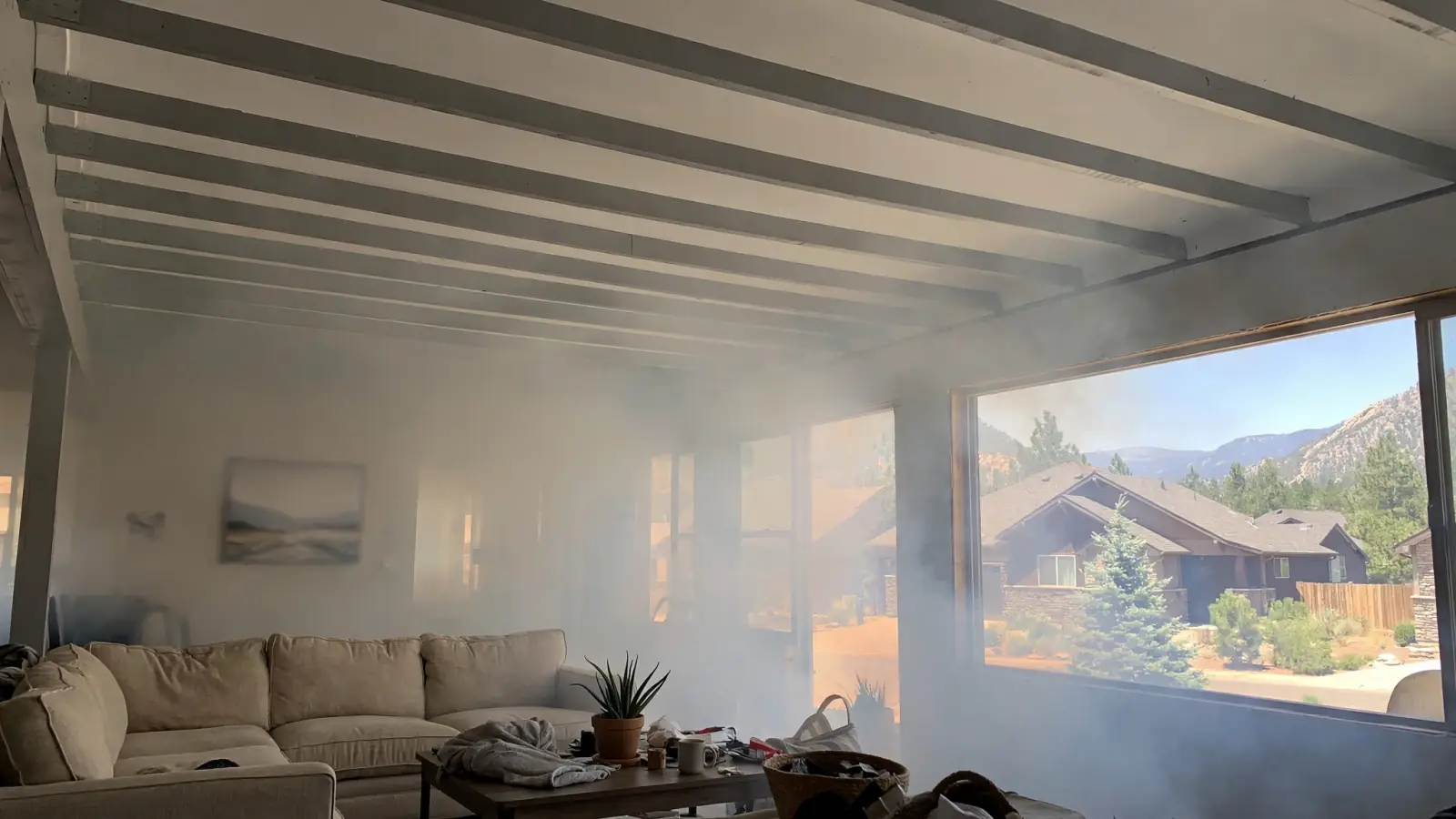
Key facts: Soot on walls and ceilings
- Soot gathers where warm, smoky air cools: ceilings, upper walls, corners and cooler areas over framing.
- Stripes along a ceiling usually follow the joists, which are cooler than the spaces between them.
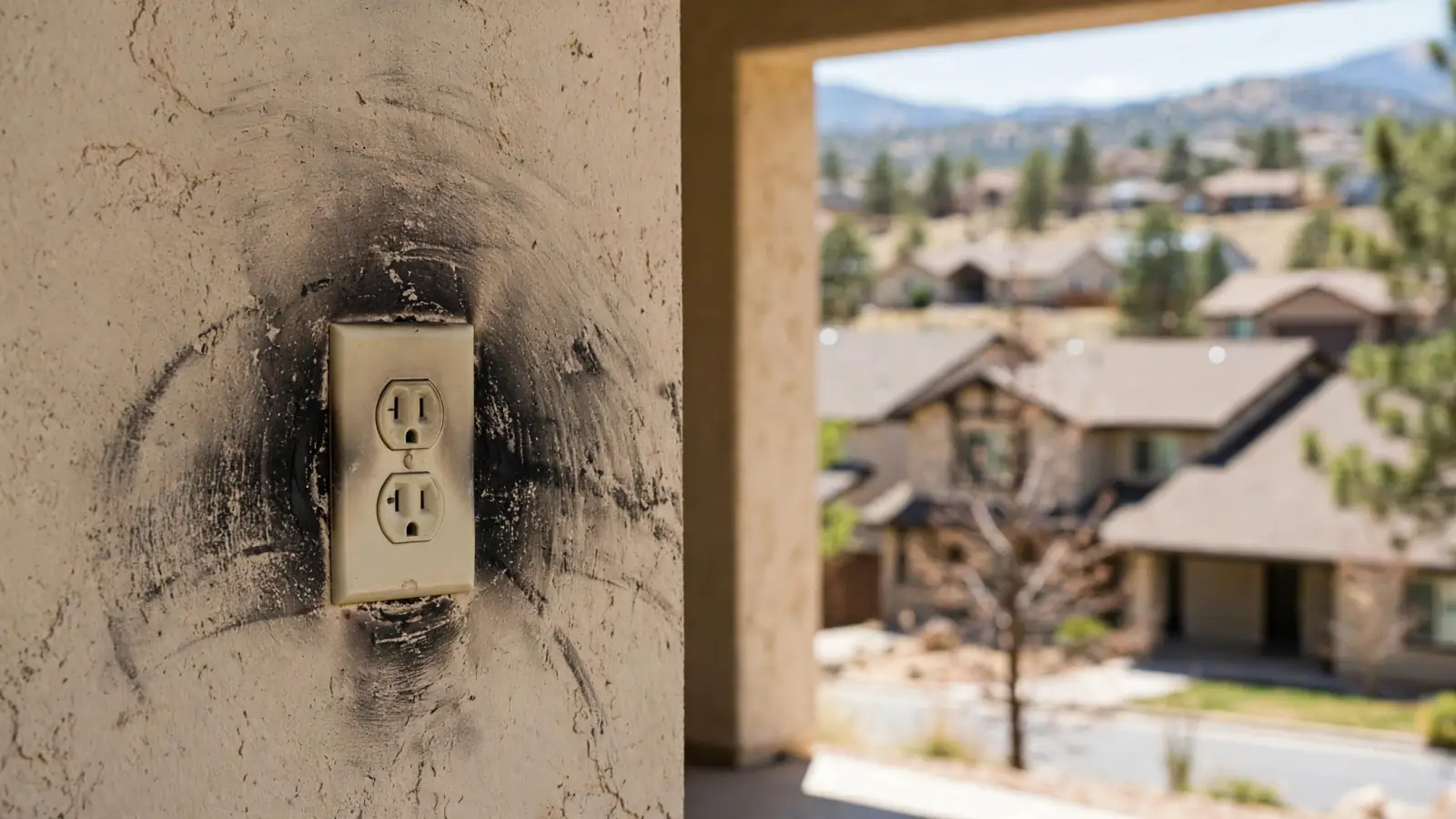
- Dark marks around outlets and switches show smoky air pulled through wall cavities.
- Dry soot sponges come first; water or cleaners applied first often smear soot permanently into paint.
Why it appears
Why soot collects where it does
Soot rides on warm smoke and drops out when the smoke cools on a surface. That is why it gathers on ceilings and the upper parts of walls first, then in corners and along the tops of door and window frames. Cooler surfaces collect more, so exterior walls are often darker than interior ones, and the areas over framing members, which are cooler than the insulated cavities between them, collect more than the spaces in between.
Patterns
Common soot patterns and what they mean
| Pattern | Likely cause | What it suggests |
|---|---|---|
| Stripes across the ceiling | Cooler joists collect more soot | Heavy deposition; whole ceiling needs cleaning |
| Black streaks above doors and windows | Smoke flowing out of the room | Shows the path smoke took |
| Dark halos around outlets and switches | Air pulled through wall cavities | Residue may be inside walls |
| Black webs in corners | Chains of soot particles | Not spider webs; vacuum, don't wipe |
| Gray film on the whole wall | Light smoke throughout the room | Often cleanable with dry methods |
| Black streaks above a candle or fireplace | Localized source | Fix the source, then clean |
Test
A safe way to test soot before cleaning
- 1
Protect yourself
Wear disposable gloves and a fitted N95 respirator, and keep children and pets out of the room.
- 2
Do a touch test
Lightly touch a hidden area with a gloved fingertip. Dry, powdery soot lifts off; oily soot smears.
- 3
Try a dry sponge
Pull a dry soot sponge in one direction over a small hidden area. If it lifts cleanly, the soot is dry.
- 4
Stop if it smears
If the soot smears or the sponge leaves streaks, stop. Wet or oily soot needs professional cleaning.
DIY scope
What a homeowner can reasonably clean
Anything beyond small, dry areas is best left to a restoration crew.
- Small areas of dry sootA dry soot sponge used in straight strokes can lift light, dry soot from hard surfaces.
- Candle sootLight lines above candles can usually be lifted with a dry sponge followed by gentle cleaning.
- Hard itemsGlass, metal and ceramic items can be washed once loose soot is removed.
When to call
When soot cleanup needs a professional
Call for help if soot covers most of a room or several rooms, if it smears, if it came from burning plastics or a garage fire, if the ceiling is textured, if the house was built before 1978 and paint may contain lead, or if the furnace ran during the fire. [2] Each of those situations calls for methods, equipment or testing that a homeowner usually does not have. The soot removal page explains how the work is done, and smoke damage cleanup covers the thinner film that spreads through the rest of the house.
Older homes
Soot on plaster and old paint
In older Colorado Springs houses, such as those in the Old North End, walls are often plaster with many layers of paint. Plaster cleans better than drywall, but old paint may contain lead, and sanding or scraping it creates hazardous dust. Testing comes before any aggressive cleaning in pre-1978 homes.
Colorado Springs
Dry air and soot in Colorado Springs homes
The Pikes Peak region is dry, and dry soot becomes airborne easily. Every footstep, open door or box fan can lift fine particles from floors and furniture and redeposit them on clean surfaces. Before you test or clean anything, close the doors to the sooty room, turn off fans and the furnace, and keep traffic through the room to a minimum. A portable HEPA air cleaner running in the room captures some of what gets stirred up. [3] Restoration crews take the same approach on a larger scale, sealing doorways with plastic and running air scrubbers while they work, because in dry air containment matters as much as cleaning.
FAQ
Soot on walls and ceilings questions
What causes black lines on my ceiling?
Soot collecting along the cooler joists. It shows heavy deposition and usually means the whole ceiling needs professional cleaning.
Can I wash soot off walls with soap and water?
Not as a first step. Water smears soot into paint. Try a dry soot sponge on a hidden area first, and stop if it smears.
What are the black cobwebs after a fire?
They are soot webs, chains of particles that cling together. Remove them with a HEPA vacuum, not a cloth.
Why is soot around my outlets?
Smoky air was drawn through the wall cavity and out around the outlet. Residue may be inside the wall.
Will paint cover soot stains?
Not reliably. Clean first, seal with a stain- and odor-blocking primer, then paint.
Is soot on walls dangerous?
Soot contains fine particles and chemicals that are best not breathed or touched. Wear gloves and a respirator and avoid stirring it up.
How do I clean candle soot off a wall?
Lift it first with a dry soot sponge in straight strokes. If a faint shadow remains, a mild detergent on a barely damp cloth may finish it; test a hidden spot first.
Why is one wall sootier than the others?
Exterior walls are cooler than interior ones, so more soot condenses on them. Walls nearer the fire and in the path smoke took out of the room also collect more.
Can textured or popcorn ceilings be cleaned after soot?
Rarely evenly. Textured ceilings trap soot and cannot be scrubbed; they are often sealed or re-textured, and older textures should be tested for asbestos first.
Does soot mean my wiring was damaged?
Not necessarily, but soot around outlets shows smoke moved through the wall. If the fire was nearby or water reached the wiring, have an electrician check it.
How long can soot stay on walls before it stains?
Dry soot can sit for some time without setting, but oily and acidic residues stain and etch faster. Getting the method right matters more than speed, but do not leave it for weeks.