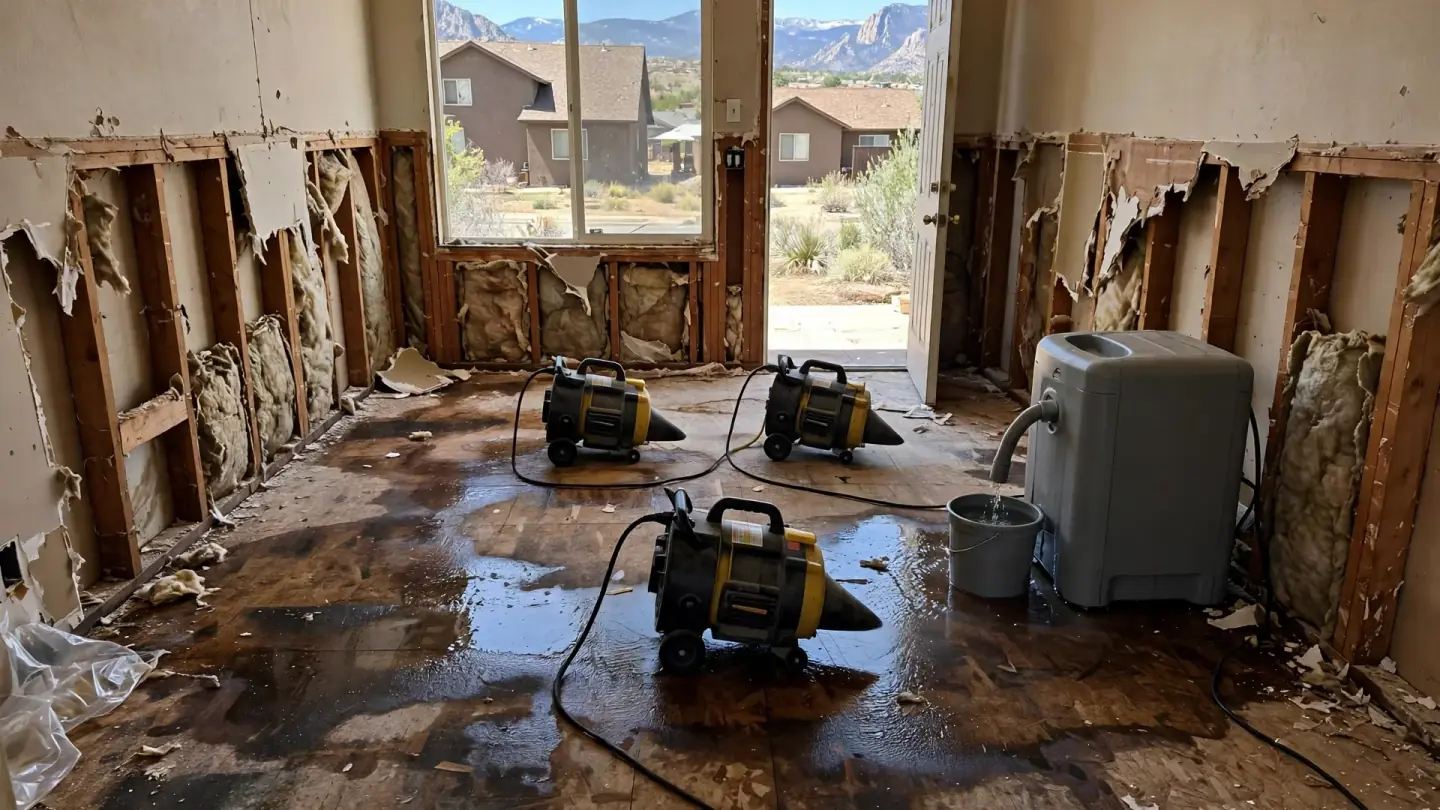
Key facts: Water Damage From Firefighting
- Water used to fight a fire runs downward through floors and into wall cavities, so the floor below the fire is often the wettest.
- The EPA advises drying water-damaged areas and items within 24 to 48 hours to help prevent mold growth.
- Firefighting water mixes with soot and ash, so wet materials are treated as contaminated rather than simply wet.
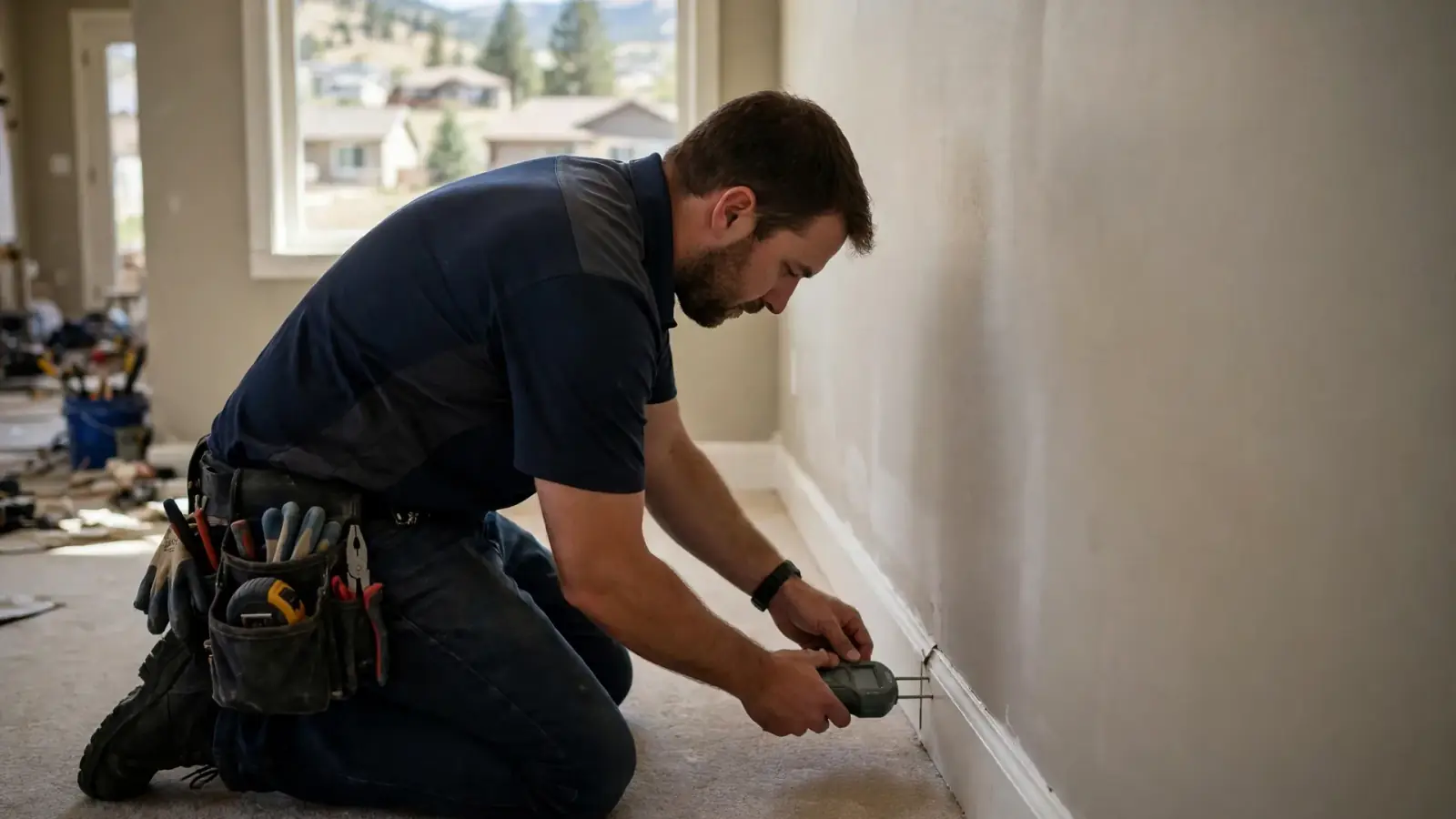
- Moisture meters and thermal cameras show where water travelled; drying is complete only when readings reach dry standards for each material.
Why it happens
How firefighting water spreads through a house
Firefighters have one priority: stop the fire. Hose streams are aimed at the seat of the fire and at hidden spaces where it might keep burning, such as attics and wall cavities, and crews sometimes open ceilings and walls to reach those spaces. The result is that a lot of water is introduced quickly at the top of the problem, and gravity takes it from there.
Water soaks the room where the fire was, then runs through gaps in the subfloor, down plumbing and wiring holes, and along framing into the rooms below. It pools on top of ceilings until the drywall sags, fills the bottom plates of walls, saturates carpet pad and settles on basement floors. Because it carried soot, ash and fire debris with it, it is dirty water, and it can stain and contaminate materials that the fire itself never reached.
In most fire losses, the water damage covers a larger area than the burn damage. That is why drying is treated as its own stage of the job, alongside soot removal and smoke cleanup, and why it should start as soon as the fire department releases the house.
Signs
Signs water from the fire has spread
Sagging or stained ceilings
Brown rings or a bulge in a ceiling below the fire room mean water is sitting on top of the drywall.
Damp baseboards and carpet edges
Water travels along the floor beneath carpet and wicks up the bottom of walls.
Musty smell after a few days
An earthy smell under the smoke smell is an early sign of microbial growth in wet materials.
Swollen trim, doors and floors
Wood and composite materials swell as they absorb water; laminate and engineered floors may cup or lift.
Water in light fixtures or outlets
Never touch these. Have power to that area shut off and checked by an electrician.
Wet basement walls and floors
Water often finds its way to the lowest level, especially in houses with finished basements.
Drying process
How firefighting water is removed and the house dried
- 1
Safety and power
The contractor confirms the fire department released the house, has power shut off to wet areas, and checks for sagging ceilings that could fall.
- 2
Extract standing water
Pumps and truck-mounted or portable extractors remove water from floors, carpet and basements. Extraction removes far more water than evaporation can.
- 3
Map moisture
Moisture meters and thermal imaging trace water into walls, ceilings, subfloors and cabinets so that nothing wet is hidden behind dry-looking surfaces.
- 4
Remove what cannot dry
Soaked carpet pad, insulation, sagging ceiling drywall and the lower part of saturated walls are removed. Opening cavities lets air reach the framing.
- 5
Set up drying equipment
Air movers push air across wet surfaces and dehumidifiers pull water out of the air. Equipment is placed according to the moisture map.
- 6
Monitor daily
Readings are taken and recorded each day, and equipment is moved as areas dry. Drying is complete when materials reach normal moisture for their type.
- 7
Clean and treat
Once dry, framing and remaining surfaces are cleaned of soot and treated if microbial growth started, before anything is rebuilt.
What stays and what goes
Wet materials after a fire: dry in place or remove?
| Material | Often dried in place | Often removed |
|---|---|---|
| Framing lumber | Yes, after cleaning, if not charred | Charred or structurally weakened members |
| Drywall | Lightly wet walls that dry quickly | Saturated, sagging, sooty or ceiling drywall holding water |
| Insulation | Rarely | Wet batts and loose fill, especially if sooty |
| Carpet | Sometimes, if water was brief and clean | Usually when water carried soot and debris |
| Carpet pad | Rarely | Almost always after a fire |
| Hardwood floors | Often, with specialized drying mats | Severely cupped or burned boards |
| Laminate and engineered floors | Rarely | Usually, once swollen |
| Cabinets | Solid wood boxes, sometimes | Particleboard boxes that swelled |
Mold timing
Mold risk in the days after a fire
The EPA's guidance on mold is direct: dry wet areas and items within 24 to 48 hours to help prevent mold growth. [1] After a fire, that clock is hard to beat, because houses are often closed up, without power and waiting for the insurance process to start. Warm interiors, wet organic materials such as drywall paper and wood, and soot that adds nutrients create good conditions for growth.
Colorado Springs' dry climate helps, but it does not remove the risk. Outdoor humidity is low, yet the inside of a closed, wet house can stay humid for days. Basements are especially vulnerable because they are cool and receive the water that drains from above. The surest way to limit mold is to start extraction and drying quickly and to remove materials that cannot dry. The EPA's mold guidance is a useful reference when deciding what can be cleaned and what should go.
Material moisture
How different materials take on and give up water
| Material | How it absorbs water | How it dries | Watch for |
|---|---|---|---|
| Drywall | Wicks water upward from the floor quickly | Dries if cavities are opened | Sagging, crumbling, staining, mold on the back face |
| Plaster | Absorbs more slowly | Slow to dry fully | Loss of bond to lath, efflorescence |
| Wood framing | Absorbs slowly at the surface | Dries well with airflow | Rot only with prolonged wetness |
| Concrete | Absorbs and holds water | Slow; dehumidifiers help | Lingering dampness under new flooring |
| Hardwood floors | Absorbs through seams and edges | Slow; may need mats | Cupping and crowning |
| Insulation | Holds water like a sponge | Poorly in place | Compression and odor |
Homeowner steps
What you can do safely about firefighting water
- Wait for the fire department's release and keep power off to wet areas.
- Photograph water damage before anything is moved, including ceilings, floors and basement areas.
- Mop or wet-vacuum standing water only if power is off in that area and it is safe to stand there.
- Move undamaged belongings out of wet rooms and off wet carpet.
- Put foil or wood blocks under furniture legs on wet carpet to limit staining.
- Open interior doors, cabinets and drawers to help air circulate once the house is safe.
- Do not use household fans that will blow soot around; wait for the contractor's air movers and filtration.
Dirty water
Why firefighting water is treated as contaminated
Water from a fire hose starts clean, but by the time it reaches the floor below it has passed through burned materials, soot, ash and debris. It can carry residues from burned plastics, insulation and household chemicals. Restoration contractors therefore treat it more like contaminated water than like a clean pipe leak. That changes what can be saved: porous materials soaked with sooty water are usually removed, and remaining surfaces are cleaned rather than just dried.
For you, the practical point is to wear gloves and boots when moving through wet areas, to keep children and pets away, and to wash hands and clothing after contact. Food, medicines and personal care items that got wet should be discarded.
Basements
Firefighting water in Colorado Springs basements
Many Colorado Springs houses have full or partial basements, and many of those are finished with carpet, drywall and bedrooms. Firefighting water from the main floor often ends up there. Finished basements are slow to dry because walls are often against cool foundation concrete and air circulates poorly.
Drying a finished basement usually means removing wet carpet and pad, cutting out the lower part of affected drywall, removing wet insulation behind it, and running dehumidifiers until the concrete and framing read dry. Expect that walls against the foundation will take longer than interior partitions. If the furnace and water heater are in the basement, have them checked if water reached them.
Local context
Drying fire-damaged homes at Colorado Springs' altitude and climate
The Pikes Peak region's low humidity is an advantage for drying. Dehumidifiers and air movers work efficiently, and once a house is opened up, materials can dry faster than in more humid cities. Winter, though, brings two complications. A house without heat after a fire can freeze, and water left in pipes, traps or wet materials can freeze and cause additional damage. Drying in a cold house is also slower, so contractors sometimes bring in temporary heat.
After the 2012 Waldo Canyon Fire, the burn scar also raised the risk of flash floods and debris flows into parts of the city in the years that followed. [3] That kind of flood damage is a separate problem from firefighting water, but homeowners in burn-scar drainages should know that a fire can change runoff patterns for years.
Insurance
Recording water damage from firefighting for your claim
Water damage from putting out a fire is generally part of the same loss as the fire, but it needs to be documented on its own. Photograph wet ceilings, floors, basement areas and damaged belongings before they are moved. Ask the contractor for their daily moisture readings and drying logs; adjusters often rely on that record to confirm that drying was necessary and complete.
If removal of wet materials is needed before an adjuster can visit, take clear photos, keep a sample if practical, and get a written note from the contractor explaining why. Working with your insurance adjuster covers documentation in more detail.
Rebuild timing
Why rebuilding should wait for dry readings
It is tempting to close walls and lay new flooring as soon as possible. Covering framing or concrete that is still wet traps moisture, invites mold and can ruin the new materials. Drying should be confirmed with recorded readings against normal values for each material, and the cleaned framing should be checked for soot and odor before insulation and drywall go back.
Rebuilding work after a fire generally requires permits. Your contractor or builder should explain which permits apply to your repair.
Related services
Water damage alongside other fire repairs
Firefighting water damage nearly always comes with other work. Openings made by firefighters, broken windows and roof vents need board-up and tarping to stop weather getting in and making the water damage worse. Soot carried in the water and left on surfaces calls for soot removal. And wet, smoky fabrics and belongings often need to go out for contents cleaning before they can dry properly.
On the call and on site
What to expect from a drying contractor
- 1
Tell them where water went
On the call, describe which floors and rooms are wet, whether there is a basement, whether water is still standing, and whether power and gas are on.
- 2
Initial walk-through
At the visit, the contractor checks ceilings for sagging, takes first moisture readings and photographs conditions before anything is removed.
- 3
Agree what comes out
They explain which wet materials need to be removed and why, and you agree the plan before demolition starts.
- 4
Equipment set-up
Extraction, air movers, dehumidifiers and air scrubbers are placed according to the moisture map; you are told how long they need to run and how to handle power.
- 5
Daily readings
Someone returns to read moisture levels, adjust equipment and record progress. Ask to see the log.
- 6
Sign-off
When every area reads dry, equipment is removed and the cleaned structure is ready for repairs.
Equipment
The drying equipment you may see in your house
- Truck-mounted or portable extractorsPowerful wet vacuums that pull water out of carpet, pad and hard floors far faster than evaporation could.
- Air moversLow, snail-shaped fans that blow air across wet floors and wall surfaces to speed evaporation.
- DehumidifiersLow-grain refrigerant or desiccant units that pull water vapor out of the air so it does not settle back into materials.
- Air scrubbersHEPA-filtered machines that capture soot and ash particles disturbed during drying and demolition.
- Floor drying matsPanels that draw moisture out of hardwood floors through suction, used when boards can be saved.
- Moisture meters and thermal camerasInstruments that show where water is and confirm when materials are dry.
Hidden water
Water you cannot see after a fire
Some of the most important water is invisible. It sits in the bottom track of interior walls, between subfloor layers, inside the cavities of exterior walls behind insulation, under cabinets and beneath vinyl or tile floors. A dry-looking floor can have a wet subfloor under it, and a painted wall can be dry on the surface while the cavity behind it is wet. That is why moisture mapping is done with instruments rather than by touch.
Under-cabinet spaces are a common miss. Water runs under kitchen and bathroom cabinets and stays there, where there is little air movement. Contractors sometimes remove the toe kicks or drill small holes to ventilate those spaces, and they record readings there like anywhere else. Ask whether cabinet bases, closets and stair stringers were included in the moisture map.
Contents and water
Belongings soaked by firefighting water
Furniture, boxes, books, clothing and electronics sitting in rooms below the fire are often soaked even when untouched by flames. Wet cardboard boxes collapse and wick water into their contents, wooden furniture legs absorb water from wet carpet, and paper swells and molds quickly. Moving belongings out of wet areas early is one of the most useful things a homeowner can do once the house is safe.
Items that matter most, such as photographs, documents and heirlooms, can sometimes be frozen to stop mold and buy time until they can be dried by specialists. Upholstered furniture and mattresses soaked with sooty water are usually not worth keeping. Your contractor can sort contents into what can be dried and cleaned, what should be packed out, and what should be photographed and discarded.
Second floors and ceilings
When the fire was upstairs
If the fire was on an upper floor or in the attic, the main floor below usually takes most of the water. Ceilings fill like shallow trays until the drywall sags or tears. Contractors often poke small drainage holes in a bulging ceiling to release water in a controlled way before removing the damaged section, rather than letting the whole area collapse. Keep everyone out from under a sagging ceiling until that is done.
Light fixtures and ceiling fans in those ceilings may hold water and should stay switched off until checked. Insulation above the ceiling is almost always replaced after it has been soaked with sooty water, because it compacts, holds moisture and keeps the smell of smoke.
Frozen pipes
Winter fires and frozen plumbing
A house fire in winter often ends with the heat off, windows broken and water left in pipes, traps and wet materials. Overnight temperatures in Colorado Springs regularly fall below freezing from late autumn into spring, and frozen pipes can burst and add clean-water damage on top of the firefighting water. If the house cannot be heated, ask a plumber or the contractor about draining the plumbing system and protecting fixtures until repairs begin.
FAQ
Questions about water damage from firefighting
How much water does it take to put out a house fire?
It varies widely with the size of the fire and how long it burned. Even a contained room fire can leave enough water to soak the floor below and reach the basement.
How fast do I need to dry the house after a fire?
The EPA recommends drying wet areas within 24 to 48 hours to help prevent mold. Start extraction and drying as soon as the fire department releases the house.
Can wet drywall be saved after a fire?
Lightly damp drywall that dries quickly sometimes can. Drywall soaked with sooty water, sagging or holding water on a ceiling is usually removed.
Will my wet carpet have to be replaced?
The pad almost always does. The carpet sometimes can be cleaned and dried if the water was brief, but sooty water usually means replacement.
Is it safe to turn the power back on after firefighting?
Not in areas where water reached wiring, outlets or fixtures until an electrician has checked them. The utility or fire department may also have shut off service.
How do I know when the house is dry?
Your contractor should take and record moisture readings daily. The house is dry when materials read at normal levels for their type, not when surfaces feel dry.
Does insurance cover water damage from firefighting?
It is usually treated as part of the fire loss, but policies vary. Document it separately and ask your adjuster.
Can mold grow in a dry climate like Colorado Springs?
Yes. Inside a closed, wet house, humidity stays high even when outdoor air is dry. Basements and wall cavities are the usual problem areas.
Can I use household fans to dry the house after a fire?
Not until soot has been controlled. Fans blow fine residue around. Professional drying uses air movers alongside HEPA air scrubbers and dehumidifiers.