Key facts: Water Damage From Firefighting in Mountain Shadows
- In walk-out homes, the uphill foundation wall is below grade and dries slowly after firefighting water reaches it.
- The EPA recommends drying water-damaged materials within 24 to 48 hours to help prevent mold growth.
- Firefighting water carries soot and ash, so soaked porous materials are usually removed rather than dried in place.
- Burn scars above the city raised flash flood risk for years after the 2012 Waldo Canyon Fire.
Where the water goes
How hose water moves through a walk-out home
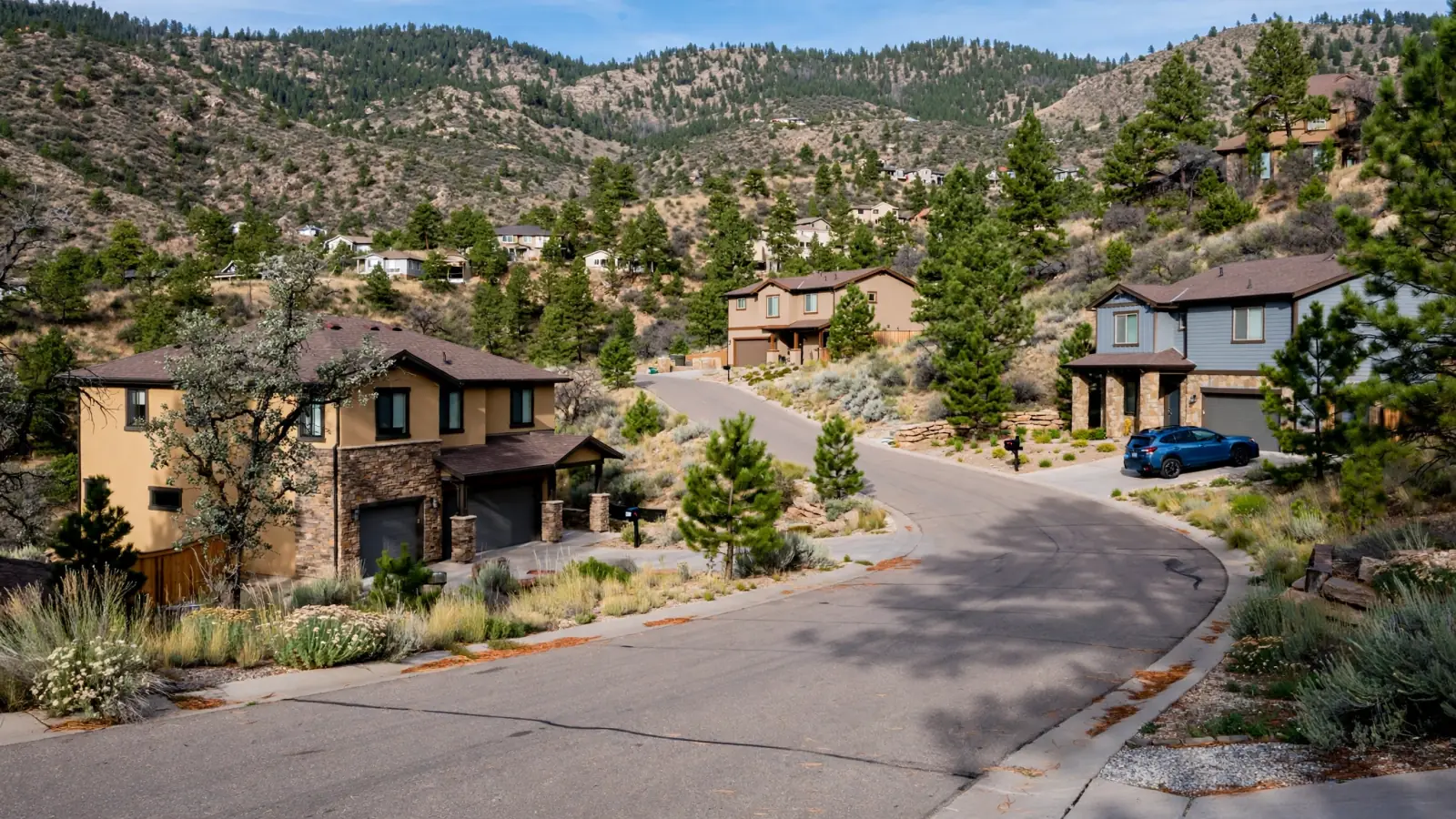
Mountain Shadows houses typically step down the slope: main floor at street level, lower level opening onto the back yard. When crews put water on a main-floor or upstairs fire, it runs through the subfloor, down plumbing and wiring holes and along the stairwell into the lower level. There it spreads under carpet and pools against the uphill foundation wall, which is concrete backed by soil and stays cool. That wall is the slowest part of the house to dry.
Finished lower levels are common here, often with bedrooms, a family room and the mechanical room. Drywall, carpet pad and insulation along the buried wall soak up water quickly. Because the water passed through burned materials, it carries soot, so the general approach on the water damage from firefighting page treats those materials as contaminated, not just wet.
Drying plan
A typical drying plan for a hillside house
- 1
Extract from the lowest point first
Water is pulled from lower-level carpet and floors where it collected.
- 2
Map the buried wall
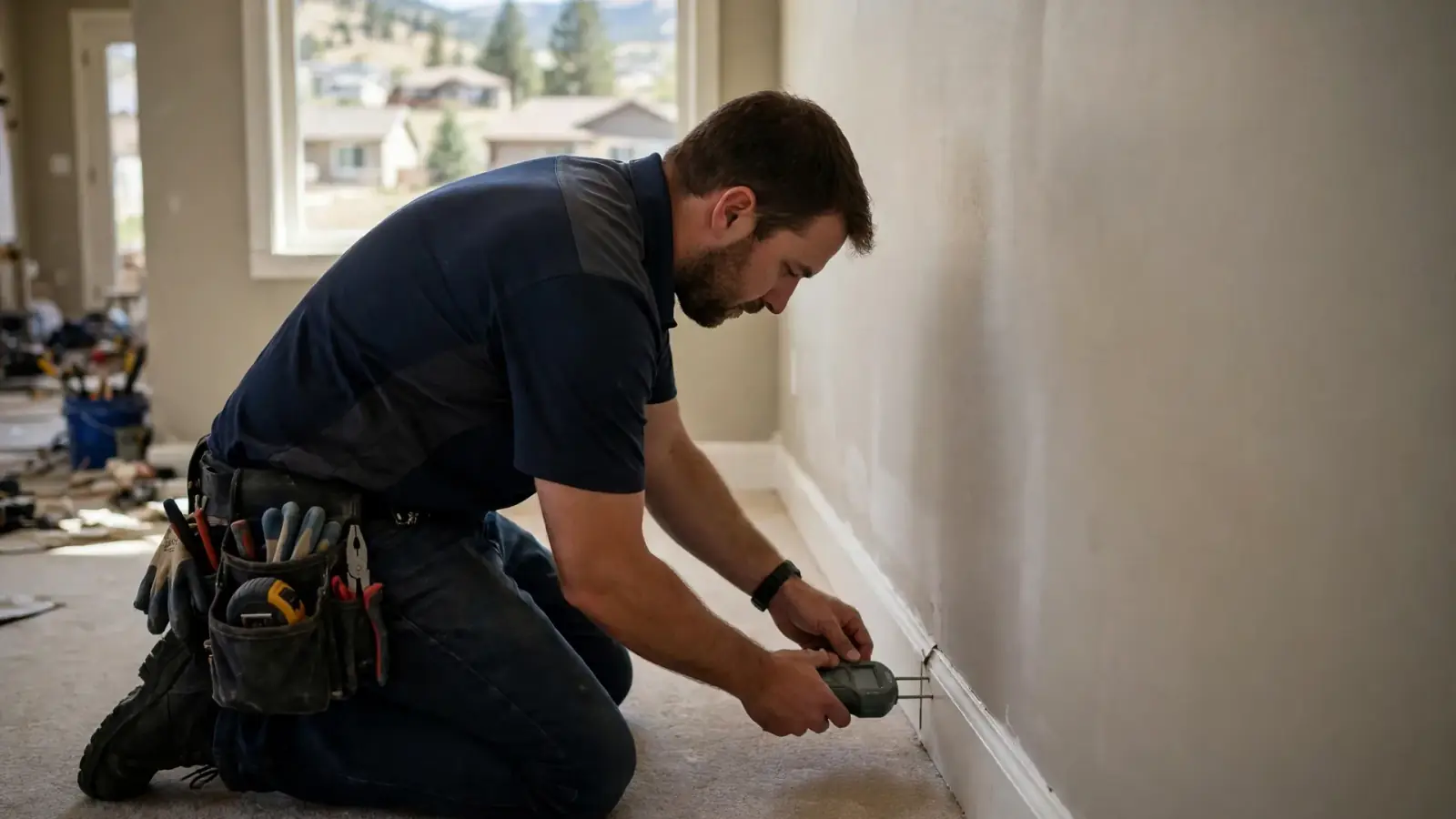
Moisture readings along the uphill foundation wall show how high water wicked into drywall.
- 3
Remove what cannot dry
Wet pad, the lower section of drywall and insulation behind it come out so the cavity can breathe.
- 4
Dehumidify for days
Dehumidifiers run against the cool concrete until readings reach normal; this wall often takes longest.
- 5
Check the main floor and stairs
Subfloor, stair stringers and cabinet bases on the main level are read and dried as well.
Watch points
Things that slow drying in Mountain Shadows homes
Cold foundation walls
Below-grade concrete stays cool and gives up moisture slowly.
Mechanical room
The furnace and water heater often sit in the lower level and should be checked if water reached them.
Winter temperatures
An unheated house dries slowly and plumbing can freeze; temporary heat may be needed.
Sloped yard drainage
Snowmelt or rain running toward the house adds water if gutters or grading were damaged in the fire.
Mold timing
Mold risk in a closed-up lower level
The EPA's advice is to dry wet areas within 24 to 48 hours to help prevent mold. A closed lower level after a fire is a difficult place to meet that deadline: the air is still, the walls are cool and the drywall paper is a good food source. The dry Front Range climate helps once the house is opened up and dehumidifiers are running, but it does not dry a closed basement on its own. Start extraction as soon as the fire department releases the house.
Homes below the burn area also have a longer-term water concern. After Waldo Canyon, the bare slopes shed rain quickly, and officials warned of flash floods and debris flows for years. That is separate from firefighting water, but if your street sits below burned ground, keep gutters, grading and window wells in good order.
Before the crew
What you can do in the first hours in 80919
Keep power off to any lower-level circuits that got wet, and stay out from under ceilings that bulge. If it is safe to stand in the area, move furniture and boxes off wet carpet and open interior doors to let air move. Photograph standing water, ceiling stains and the lower-level walls before anything is removed. Those photos, plus the contractor's daily moisture log, are what an adjuster uses to see why materials were taken out. More on Mountain Shadows homes is on the area page.
Belongings below
Protecting lower-level belongings from hose water
Lower levels in these houses are often storage as well as living space: boxed holiday decorations, photo albums, sports gear and furniture sitting on carpet. Cardboard wicks water upward and collapses, so move boxes off wet floors as early as it is safe to do so, and set aside photographs and papers that got wet; freezing them can stop mold until they are dried by a specialist.
Furniture legs on wet carpet leave rust or stain marks; foil or wood blocks under them limit the damage until the carpet is pulled. Electronics in a wet family room should stay unplugged until checked.
Records
Keeping drying records for your claim
Ask the contractor for the daily moisture log, the photos taken before materials were removed and a note explaining why each item came out. Adjusters rely on that record to see that drying was needed and complete. Keep copies with your own photos.
FAQ
Firefighting water questions in Mountain Shadows
Why is the uphill wall of my basement still wet days later?
It is concrete against soil and stays cool, so it gives up moisture slowly. Removing wet drywall and insulation and running dehumidifiers is the usual fix.
Will my lower-level carpet be replaced?
The pad almost always is after sooty firefighting water. The carpet itself sometimes can be cleaned if the water was brief, but often it is replaced.
Can mold grow in Colorado Springs' dry climate?
Yes, inside a closed, wet house. Basements and wall cavities stay humid even when outdoor air is dry.
Should I worry about flooding after a wildfire above my street?
Burn scars shed water fast. After the 2012 fire, flash flood risk below the burn area stayed elevated for years.
Does my furnace need checking if water reached the mechanical room?
Yes. Have the furnace and water heater inspected before they run again.
How long do dehumidifiers need to run in a walk-out basement?
Often several days and sometimes longer for the uphill wall. The contractor should take daily readings and remove equipment only when materials read dry.
Who decides what wet material is removed?
The contractor recommends it based on moisture readings and contamination, and documents it; your adjuster reviews the record.
Is it safe to use lower-level outlets after firefighting water?
Not until an electrician has checked any circuits that got wet. Keep that power off in the meantime.
Will drywall along the foundation wall be cut out?
Usually the lower section is removed so the cavity and concrete can dry, then replaced once readings are normal.