Key facts: Soot Removal
- Soot is mostly fine carbon particles produced by incomplete burning; how it was produced decides whether it is dry, oily or sticky.
- Dry soot sponges and HEPA vacuums come first; wiping soot with water or cleaner first usually smears and sets it.
- Some soot residues are acidic and can etch metal, glass and grout within days, so fixtures near the fire are cleaned early.
- Older homes may have lead paint or asbestos-containing textures that must be tested before scraping or sanding.
What soot is
How soot forms and why it clings
Soot forms when something burns without enough oxygen to burn completely. Instead of turning entirely into carbon dioxide and water vapor, part of the fuel breaks into tiny particles of carbon bound up with tars, oils and other compounds. Those particles ride the hot smoke and stick to any cooler surface they touch. Wood and paper tend to make a drier, flakier soot. Plastics, foam cushions, synthetic carpet and vinyl tend to make a heavier, oily soot that grips surfaces and smears.
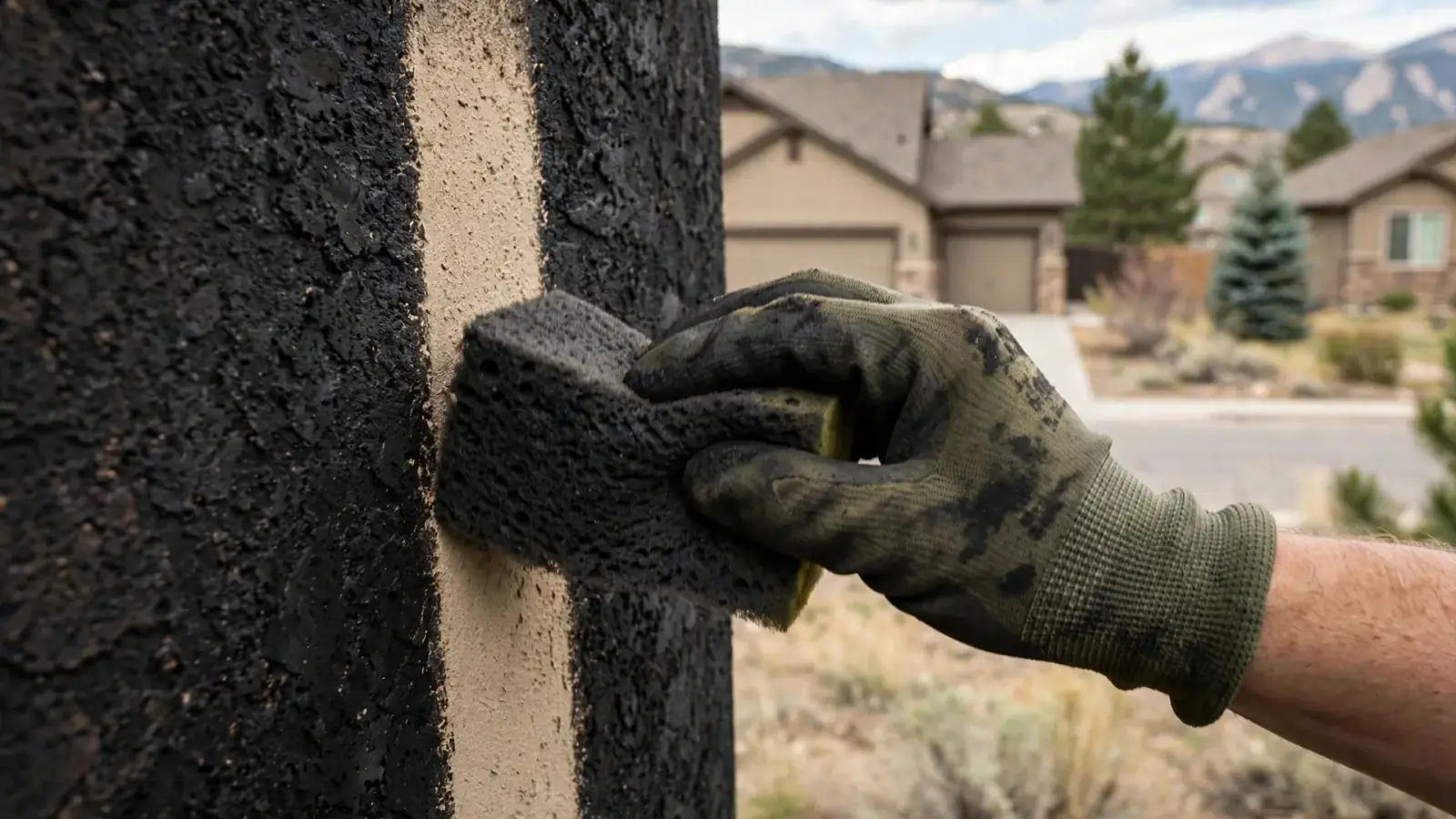
Soot gathers in predictable places. It is heaviest on ceilings and the upper third of walls, because hot smoke rises and spreads along the ceiling before it cools. It collects in corners, along the tops of window and door frames, on light fixtures, and in the thermal lines where framing behind drywall is cooler than the cavities between studs. Those faint vertical stripes, sometimes called ghosting, often show exactly where the studs are.
Removing soot is the hands-on part of fire cleanup. It overlaps with smoke damage cleanup, which deals with the thinner film that spreads through the whole house, but soot removal concentrates on the heavily blackened surfaces closest to the fire, where the wrong method does the most harm.
What to look for
Signs you are dealing with heavy soot, not light smoke film
Black instead of gray
A dense black layer that hides the paint color, rather than a gray haze, means heavy soot that needs dry removal first.
Smears when touched
If a fingertip leaves a streak, the soot is oily and will spread with any wet cloth.
Webs in corners
Black strings hanging from ceiling corners, sometimes called soot webs, are chains of particles stuck together, not spider webs.
Stripes on ceilings
Regular dark lines on a ceiling or exterior wall mark the framing and show heavy deposition.
Etching on fixtures
Dull, pitted chrome, cloudy glass or discolored grout can signal acidic residue that should be cleaned soon.
Blackened brick or stone
Masonry around a fireplace or near the fire can absorb soot into its pores and needs its own method.
Soot by source
What burned changes the soot
| What burned | Soot character | Handling notes |
|---|---|---|
| Wood, paper, cardboard | Dry, powdery to flaky, gray-black | Lifts well with HEPA vacuum and dry sponge |
| Plastics, foam, synthetic fabric | Oily, sticky, black, smears | Dry pass first, then solvent cleaners tested in small areas |
| Cooking oils and food | Thin, yellow-brown, greasy, strong odor | Degreasers, multiple passes, sealing primer before paint |
| Furnace or oil appliance malfunction | Fine, oily, spread widely through ducts | Whole-house cleaning and duct cleaning |
| Candles | Fine black lines above flames and along cooler wall areas | Often light; dry sponge then gentle cleaning |
Method
How soot is removed, in the right order
- 1
Protect and contain
Floors and furniture in the work area are covered, clean rooms are sealed off with plastic, and air scrubbers with HEPA filters run to capture particles as they are disturbed. [4]
- 2
Vacuum loose soot
HEPA vacuums with brush attachments remove loose particles and soot webs without rubbing them into surfaces. Ordinary vacuums blow fine soot back into the room.
- 3
Dry sponge every surface
Vulcanized rubber sponges are pulled in straight strokes from top to bottom. Each sponge is cut or refreshed as it loads up, so soot is lifted, not pushed around.
- 4
Test wet cleaning
On a small hidden area, the technician tries detergent or solvent cleaners suited to the residue and checks the result before treating the whole surface.
- 5
Clean top to bottom
Ceilings first, then walls, then trim and floors, rinsing as required so cleaner residue does not attract new dirt.
- 6
Seal what stays stained
Where soot has penetrated porous material, a shellac-based or other odor-blocking primer is applied before repainting so stains and smells do not bleed through.
- 7
Inspect in good light
Surfaces are checked in daylight and with raking light, and any shadowing is cleaned again before the area is called finished.
Surfaces
Soot removal by surface
- CeilingsUsually the worst-affected surface. Smooth ceilings are dry-sponged and cleaned; textured ceilings often cannot be cleaned evenly and may be sealed or re-textured once tested for asbestos. [3]
- Painted wallsGloss paint releases soot more easily than flat paint. Heavy deposits on flat paint almost always end in sealing and repainting.
- Wood trim, doors and cabinetsFinished wood is cleaned with mild solutions and conditioned afterward. Unfinished wood inside cabinets is cleaned and often sealed.
- Brick and stoneMasonry is vacuumed, then cleaned with products and brushes suited to porous surfaces; very porous stone may keep some shading.
- Metal and glassFixtures, hardware and glass are cleaned early because acidic residue can pit and cloud them.
- FlooringHard floors clean well once the dry pass is done. Carpet near the fire usually holds heavy soot and odor and is often replaced.
Dry Front Range air
How the semi-arid climate affects soot in Colorado Springs homes
Colorado Springs sits at roughly 6,000 feet on the edge of the plains, with low humidity much of the year. That dry air works in two directions after a fire. On the one hand, wet materials dry faster, and soot that was dampened by firefighting water does not stay sticky as long as it would in a humid climate. On the other hand, dry, flaky soot and ash become airborne easily, and every door opening or footstep can move them into clean rooms.
Crews working in local homes therefore lean heavily on containment: plastic barriers, closed doors, negative air pressure in the work area, and HEPA filtration running the whole time work is underway. Homeowners can help by limiting traffic through the damaged area and by not running box fans that blow air across sooty surfaces.
Age of the house
Soot in older Colorado Springs houses
Many Colorado Springs neighborhoods were built long before modern drywall and latex paint. The Old North End and Old Colorado City have houses from the 1890s and early 1900s with lime plaster walls, wood lath, high ceilings and painted woodwork. Plaster is harder and less absorbent than drywall paper, which can make careful cleaning more successful, but old paint layers often contain lead, and some mid-century ceiling textures and flooring contain asbestos.
The EPA's lead renovation rules apply to work that disturbs painted surfaces in homes built before 1978, and asbestos-containing materials should be tested before they are scraped, sanded or removed. [2] A contractor should tell you how they will check for these before any aggressive cleaning or removal begins.
Restore, seal or replace
Deciding what to do with sooted materials
| Material | Usually restored | Usually sealed | Usually replaced |
|---|---|---|---|
| Smooth painted drywall | Light to moderate soot | Heavy or oily soot after cleaning | Charred, blistered or water-soaked |
| Plaster | Light to heavy soot | Persistent shading | Cracked or delaminated sections |
| Finished wood | Most soot | Raw wood surfaces | Charred or warped pieces |
| Carpet and pad | Light soot far from the fire | Not applicable | Heavy soot, odor, or firefighting water |
| Insulation | Rarely | Not applicable | Usually, if soot reached it |
| Metal fixtures | Most, if cleaned early | Not applicable | Pitted finishes |
Your part
What you can safely do before soot removal starts
- Wait for the fire department to release the house and confirm the power and gas are safe before going in.
- Wear disposable gloves, long sleeves and a fitted N95 respirator when entering sooty rooms. [5]
- Take photos and video of every surface before anything is moved; soot patterns help the adjuster understand the loss.
- Lift lightly affected small items, such as framed photos and documents, by the edges and bag them for the contractor to assess.
- Keep the furnace fan off and replace the filter so soot is not pulled into the ducts.
- Leave blackened walls, lampshades and upholstery alone.
Soot and health
Is soot in the house dangerous to breathe?
The fine particles in soot are small enough to reach deep into the lungs, and fire soot can carry compounds released by burning plastics, finishes and household products. Short exposures during a walk-through are a minor concern for healthy adults wearing a respirator; daily exposure while living in a sooty house is a different matter. Children, older adults, and people with asthma, COPD or heart disease are the most sensitive.
The practical guidance from federal agencies for fire residue is consistent: avoid stirring it up, use HEPA filtration rather than ordinary vacuums, wear a properly fitted respirator rather than a dust mask, wash skin and clothing after exposure, and keep sensitive people away until cleanup is finished. The guide is it safe to stay after a fire covers the decision about whether to stay or relocate.
Fireplaces and chimneys
Soot from a fireplace or wood stove problem
Not all soot comes from a house fire. A downdraft, a blocked flue, a damp-wood smolder or a puff-back from an oil or gas appliance can push soot into a room without any flames escaping. Wood stoves are common in the pine country of Black Forest and in foothill homes, and a stove or chimney fault can coat a room quickly.
In those cases, the source has to be fixed before the room is cleaned, or the problem will repeat. Have the chimney inspected and the appliance serviced, then clean the room using the same dry-first method. If soot came through the forced-air system, include the ducts in the cleanup.
Behind the walls
Soot inside wall cavities and attics
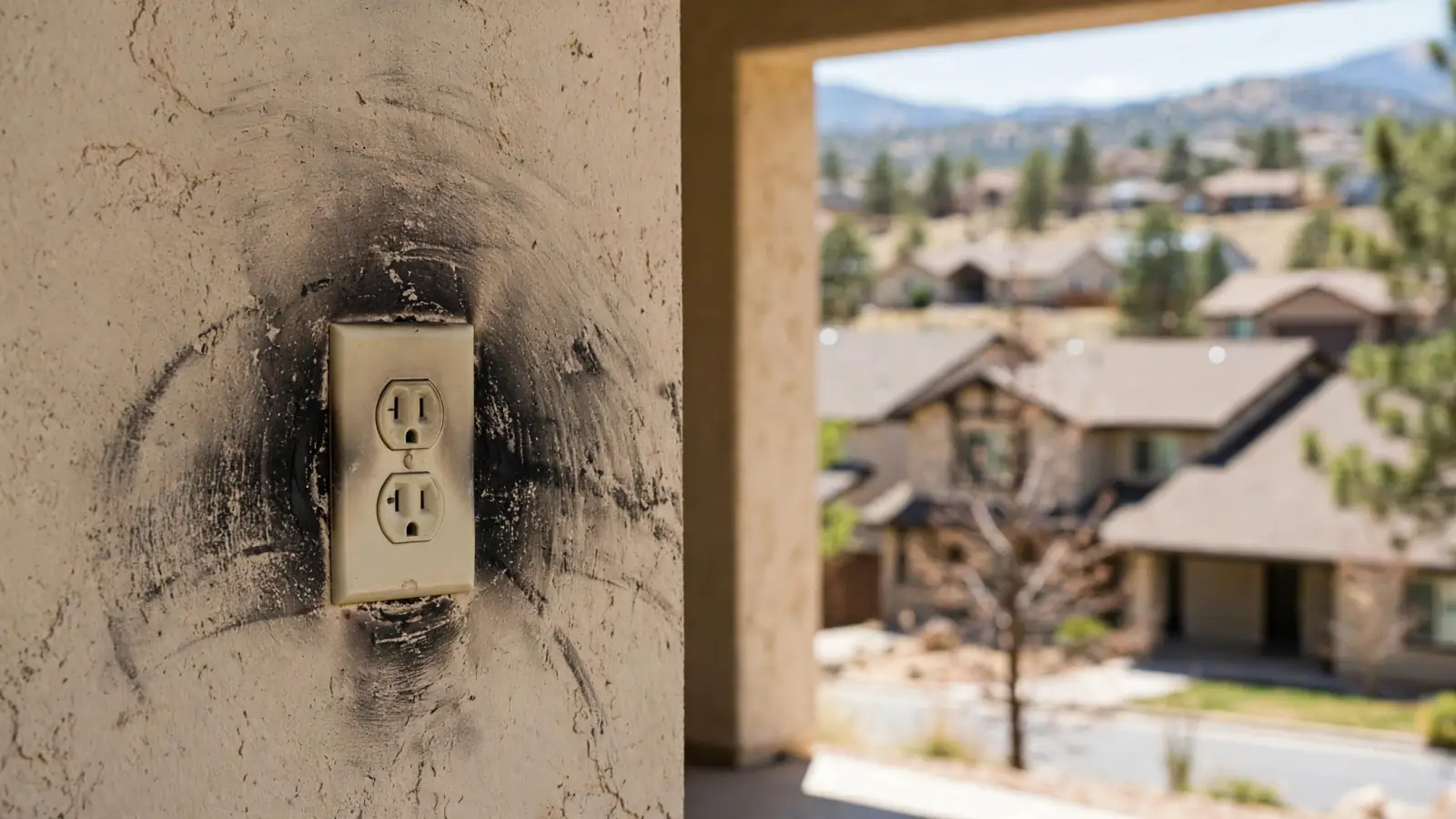
Soot can be drawn into wall cavities through outlets, switch boxes, gaps around pipes and open wall tops, and it can settle on attic insulation above the fire room. These hidden deposits do not show on finished surfaces but can produce odor long after the rooms look clean. A careful assessment checks outlet boxes on exterior walls, looks into the attic, and samples insulation near the fire area.
When soot has reached insulation, removing and replacing that insulation is usually more reliable than trying to clean it. Wall cavities with heavy deposits are sometimes opened, cleaned and sealed, which is a judgment the contractor should explain and document for your adjuster. The guide soot on walls and ceilings shows how to read the patterns you can see.
Standards
What a thorough soot removal job includes
The ANSI/IICRC S700 standard for fire and smoke damage restoration sets out how professionals should assess damage, document it, remove residue at the source, address HVAC systems and evaluate the result. [1] It also notes that hazardous materials must be handled under the rules of the local authority. Those are useful reference points when comparing contractors: ask how they test, what they document, and how they decide the work is finished.
A good final check includes a walk-through with you in daylight, a look at the cleaned surfaces from several angles, and confirmation that hidden areas such as cabinets, closets, the furnace filter and the attic were addressed. Ask for photos of hidden areas you cannot easily see yourself.
Kitchen fires
Soot after a stovetop or oven fire
Kitchen fires are the most common house fires, and they produce an awkward kind of residue. Burning cooking oil and food leaves a thin, yellow-brown, greasy film that may barely show on white cabinets but carries a sharp, sour smell. It often reaches the whole main floor in an open-plan house, and it sits on the tops of cabinets, inside range hoods, on light fixtures and on the ceiling well away from the stove.
Because this residue is grease-based, dry sponging does less and degreasing does more. Crews clean every cabinet face inside and out, the range hood and its ductwork, the ceiling and the walls, and they often seal raw wood inside cabinets afterward. If the fire spread beyond the pan to cabinets, counters or the wall, the job becomes a mix of soot removal near the stove and lighter cleaning elsewhere, with odor removal to finish.
On the call and at the visit
What to expect when a contractor comes to look at soot
- 1
Describe the fire on the call
Say what burned, how long it burned, whether the fire department came, which rooms are black and which only smell. Mention the age of the house if you know it.
- 2
Walk the house together
At the visit, the contractor walks the house with you, noting soot type and spread and checking closets, the attic and the furnace filter.
- 3
Test patches
They clean small test areas so you can see what comes off and how the surface looks afterward.
- 4
Written scope
You receive a written description of the work by room, which you can share with your insurer and compare with the adjuster's own notes.
- 5
Agreement before work
Nothing begins until you have agreed the scope and timing directly with the contractor.
Avoidable mistakes
Common soot cleanup mistakes in the first week
- Scrubbing with all-purpose cleanerSmears oily soot into paint and grout and turns a clean-and-paint job into a seal-and-paint or replace job.
- Running the furnace with the old filterPulls soot into the return ducts and sends it through the whole house.
- Washing smoky clothes on hotHeat can set some residues and odor. Sort and bag fabrics and ask about specialist cleaning for valuable items.
- Throwing items out before the adjuster sees themDiscarded items are hard to document. Photograph everything and keep damaged items until the claim is settled or the adjuster says otherwise.
- Painting too soonPaint over uncleaned soot often peels and lets stains and smells bleed through within weeks.
Garages and vehicles
Soot from a garage or vehicle fire
Attached garages are common in Colorado Springs, especially in the newer subdivisions on the north and east sides. A fire involving a vehicle, a workbench, stored fuel or a lithium-ion battery pack in the garage produces some of the heaviest, oiliest soot a house can see, because tires, plastics, fuels and lubricants all burn dirty. That soot often pushes through the door into the house and up into the room above the garage.
These jobs usually involve more replacement than a typical room fire: drywall on the garage side of the shared wall, insulation in the ceiling, and anything stored nearby. The living spaces on the other side are cleaned with the same dry-first method. EPA guidance on fire debris also flags damaged lithium-ion batteries as a hazard; they should be handled and disposed of according to local instructions rather than tossed in household trash.
Lighting and fixtures
Light fixtures, fans and vents after soot exposure
Ceiling fans, light fixtures, smoke alarms and supply registers sit right where soot is heaviest, so they need attention early. [7] Fan blades collect a thick coating that will be thrown around the room the first time the fan runs. Light fixtures and their glass shades hold soot in their crevices, and heat from bulbs can bake residue on. Smoke alarms exposed to heavy soot and heat may not work properly afterward and are usually replaced.
Contractors typically remove shades and covers to clean them separately, wipe fan blades with dry sponges before any wet cleaning, and remove register covers for cleaning. Keep fans and lights switched off in sooty rooms until they have been cleaned and, if they were exposed to heat or water, checked.
FAQ
Soot removal questions
Can I clean soot off walls myself?
Light, dry soot on a small area can sometimes be lifted with a dry chemical sponge, working in one direction. Heavy, black or oily soot is best left to a restoration crew, because the wrong cleaner smears and sets it.
What is a dry soot sponge?
It is a sponge made of vulcanized rubber that lifts soot particles without water or chemicals. It is used before any wet cleaning, and it is discarded or trimmed once it is loaded with soot.
Why do I see stripes on my ceiling after a fire?
The stripes usually follow the ceiling joists. Framing is cooler than the cavities between it, so more soot condenses along those lines.
Does soot come off brick?
Usually, with vacuuming and cleaners designed for porous masonry. Very porous brick or stone may keep some shading after cleaning.
Will soot stains come back after painting?
They can if paint is applied without cleaning and sealing. A cleaned surface sealed with a stain- and odor-blocking primer before painting usually stays clean.
Should I throw away items covered in soot?
Not right away. Photograph and keep them for the adjuster, and let the contractor assess whether they can be cleaned. Many hard items restore well.
How quickly does soot need to be cleaned?
Fixtures, glass and grout near the fire should be cleaned early because acidic residue can etch them. Painted walls are less urgent than getting the cleaning method right.
Do I need to test for lead or asbestos before soot removal?
In homes built before 1978 or with older textured ceilings and flooring, testing is the safe step before any scraping, sanding or removal. Ask your contractor how they handle it.
Sources and citations
- [1]IICRC — ANSI/IICRC S700 Standard for Fire and Smoke Damage Restoration
- [2]U.S. EPA — Lead Renovation, Repair and Painting Program
- [3]U.S. EPA — Protect your family from exposures to asbestos
- [4]U.S. EPA — Wildfires and indoor air quality
- [5]U.S. EPA — Wildfires
- [6]Wikipedia — Old North End Historic District (Colorado Springs)
- [7]NFPA — Home fire safety