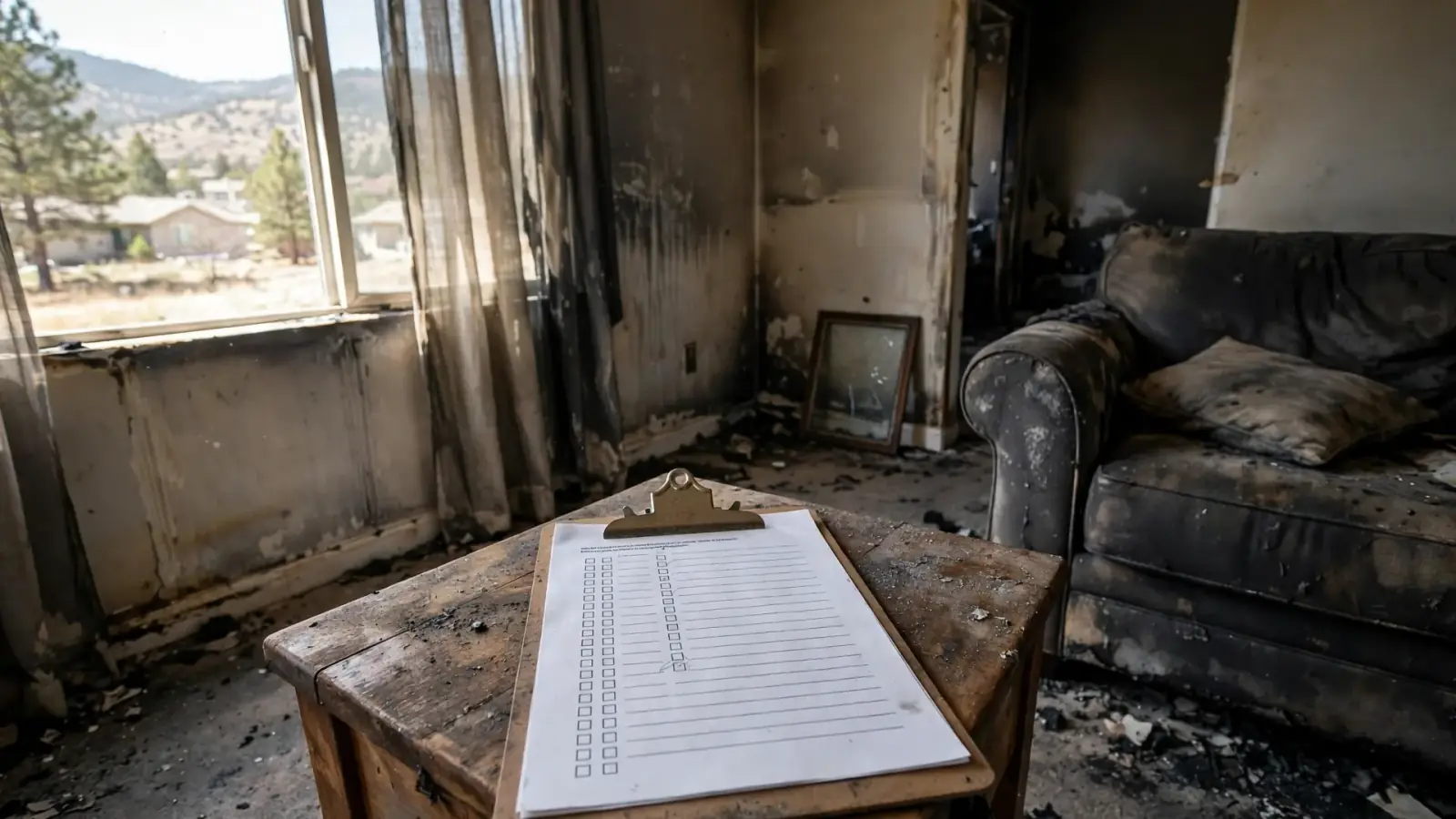
Key facts: Working with your insurance adjuster
- Report the fire to your insurer promptly and get a claim number and the adjuster's contact details.
- Photograph and video every room, closet and the exterior before cleanup, and keep damaged items until told otherwise.
- Colorado insurers must give policyholders a copy of their policy within three business days of a request.
- For some declared Colorado wildfire disasters, state rules require insurers to offer part of contents coverage without a full inventory.
Who the adjuster is
What an insurance adjuster does
A staff or independent adjuster works for your insurance company. They inspect the damage, review your policy, and prepare an estimate of what the insurer will pay for repairs, contents and living expenses under the policy. They are not your adversary, but they are not your advocate either. Clear documentation and good records help them see the full extent of the loss.
Some homeowners hire a public adjuster, a licensed professional who represents the policyholder for a share of the claim. That is a personal decision; if you consider it, check their license and understand the agreement before signing.
Before the visit
How to prepare before the adjuster arrives
- 1
Get your policy
Ask your insurer for a full copy, including declarations and endorsements. Colorado law requires insurers to provide it within three business days of a request. [1]
- 2
Document everything
Photograph and video every room, closet, the attic hatch, the furnace, the exterior, outbuildings and fences.
- 3
Keep damaged items
Do not throw out damaged belongings until the adjuster has seen them or the insurer says you may.
- 4
Prevent further damage
Arrange board-up and tarping and start drying; keep receipts. Insurers generally expect reasonable steps to protect property.
- 5
Start a contents list
Begin listing belongings room by room, with approximate age and where you bought them. The after-the-fire guide lists other first steps.
- 6
Get a contractor's scope
Ask a restoration contractor for a written description of the damage and the work needed.

During the visit
What to do while the adjuster is there
- Walk through the whole house with them, including closets, the basement, the attic access and the garage.
- Point out smoke odor and residue, not just visible burn damage; smoke and water damage are easy to under-record.
- Share your photos, your contents list and the contractor's written scope.
- Ask what happens next, when you will receive their estimate, and what else they need from you.
- Take notes, including the adjuster's name, the date and what was discussed.
Records
Records to keep throughout the claim
| Record | Why it matters |
|---|---|
| Policy and declarations page | Shows coverages, limits and deductibles |
| Claim number and contacts | Speeds every conversation |
| Photos and video | Shows condition before cleanup |
| Contents inventory | Supports the contents part of the claim |
| Receipts for living expenses | Supports additional living expense coverage |
| Contractor scopes and invoices | Supports the repair and mitigation parts of the claim |
| Call and email log | Tracks promises, requests and deadlines |
Contents
Building a contents inventory
Listing everything you owned is the hardest part of many fire claims. Start with photos and videos from before the fire, including holiday and birthday photos that show rooms in the background. Use bank and card statements, email receipts and online order histories. Walk through each room in your mind, drawer by drawer. If a restoration contractor packs out your belongings, their inventory with photos is a strong starting point; see contents pack-out and cleaning.
For owner-occupied homes lost in some governor-declared wildfire disasters, Colorado rules require insurers to offer a portion of contents coverage without a full itemized inventory, with an inventory needed for the rest. Ask your insurer whether any such rule applies to your loss.
Living expenses
Additional living expenses while you are displaced
If your home is unlivable, many policies pay additional living expenses: the extra amount you spend on housing, meals and other necessities above your normal living expenses. Keep every receipt, and ask your insurer how and when to submit them. Colorado has specific rules for living expense coverage after declared wildfire disasters; your insurer and the state Division of Insurance can explain how they apply.
Disagreements
If you disagree with the adjuster's estimate
Disagreements are common, especially over the extent of smoke damage, whether materials can be cleaned or must be replaced, and contents values. Ask the adjuster to explain their reasoning item by item, and provide additional documentation, such as your contractor's scope, test results and photos. Many policies include an appraisal process for disputes over the amount of loss. If you believe your claim is being handled unfairly, the Colorado Division of Insurance accepts consumer complaints.
Communication
Keeping communication with your insurer organized
Claims move faster when communication is organized. Use one email thread or folder for the claim, put the claim number in every subject line, and confirm phone conversations with a short email afterward summarizing what was agreed. If your adjuster changes, send the new adjuster a short summary of where things stand with copies of key documents. Respond promptly to requests for information, and if something will take time, say so and give a date. Clear, dated records help both sides and make it easier to resolve questions later.
FAQ
Insurance adjuster questions
Should I clean up before the adjuster visits?
Photograph everything first. Take reasonable steps to prevent further damage, such as board-up and drying, but ask your insurer before major cleanup or discarding items.
How do I get a copy of my insurance policy in Colorado?
Ask your insurer in writing. Colorado law requires them to provide a copy within three business days of the request.
Do I have to use the insurer's preferred contractor?
Generally you can choose your own contractor, but check your policy and talk to your insurer about how estimates will be compared.
What if the adjuster misses smoke damage?
Point it out and document it: closets, ducts, odor, and residue on surfaces. Ask for a re-inspection if needed, and share your contractor's scope.
Does insurance cover a hotel after a fire?
Many policies cover additional living expenses when the home is unlivable. Ask your insurer and keep every receipt.
Can I make a complaint about my insurer in Colorado?
Yes. The Colorado Division of Insurance accepts consumer complaints about how claims are handled.
How long does a fire insurance claim take?
It varies with the size of the loss and how quickly documentation is provided. Small smoke claims may settle in weeks; large losses with rebuilding can take many months.
Should I get more than one restoration estimate?
You may, and some insurers ask for one. What matters most is a clear, written scope that describes the work room by room.