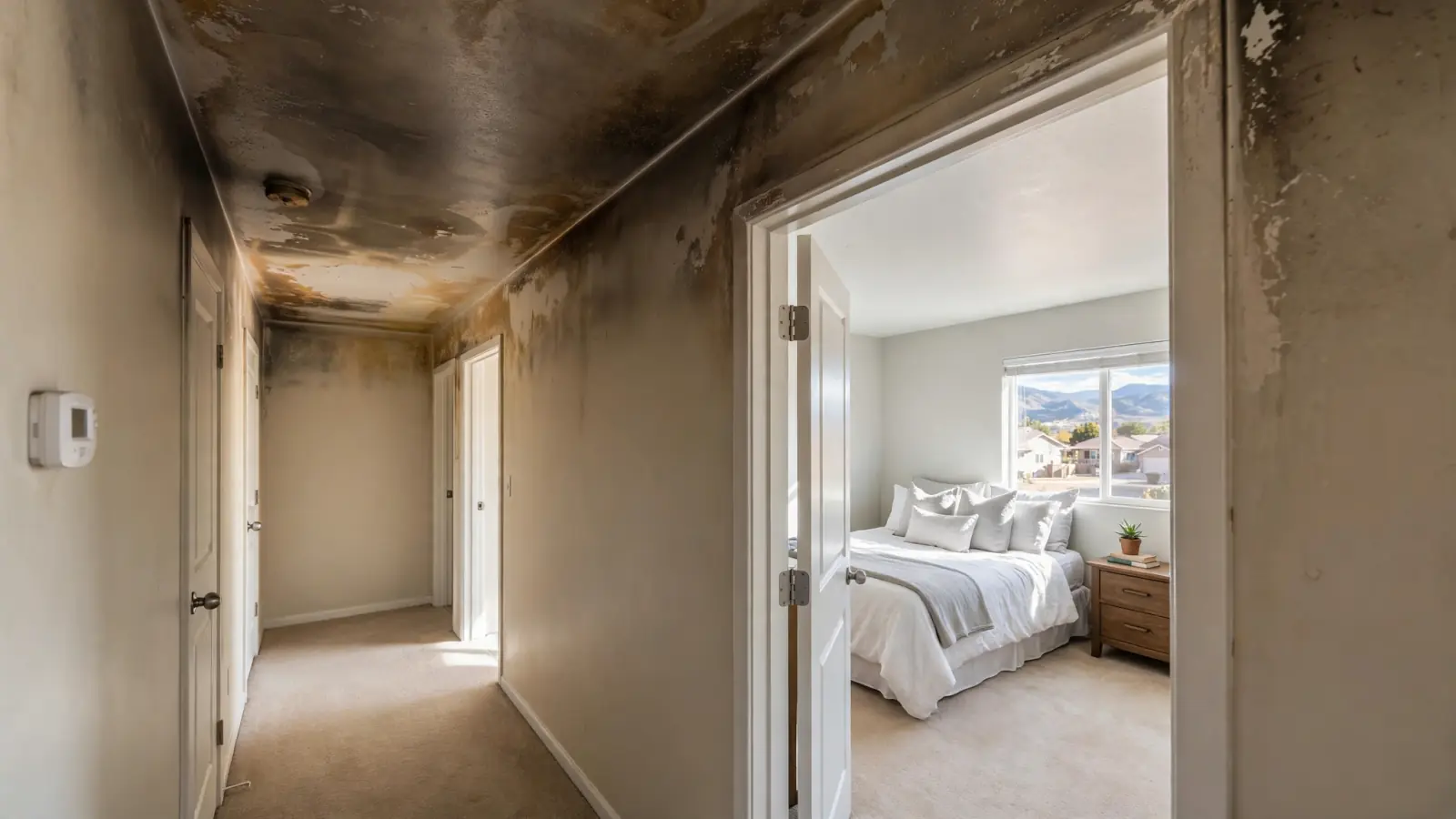
Key facts: Is it safe to stay after a fire
- Do not stay in a fire-damaged house until the fire department has released it.
- A house without safe gas, power, heat and water is not safe to live in, regardless of smoke levels.
- Children, older adults, pregnant people and people with heart or lung conditions are most sensitive to smoke residue.
- The EPA recommends HEPA filtration and closed windows to reduce indoor exposure during and after wildfire smoke.
The short answer
When staying is reasonable and when it is not
Staying can be reasonable when the fire was small and contained to one area, the fire department has released the house, the utilities are working and safe, the structure is sound, smoke has not spread through the whole house, and nobody living there is especially sensitive to smoke. It is not reasonable when any of those conditions is missing.
In practice, after a fire that sent smoke through the house or left firefighting water behind, most families are better staying elsewhere until the worst of the cleaning is done. After a wildfire smoke event without fire inside, many families can stay if they clean carefully, replace filters and use HEPA air cleaners. [1]
Checklist
A quick checklist for staying after a fire
| Question | Why it matters |
|---|---|
| Has the fire department released the house? | Fire can rekindle in hidden spaces, and officials check structural safety. |
| Are gas, power, water and heat working safely? | Unsafe utilities create fire, shock and carbon monoxide risks. |
| Are ceilings, floors and stairs sound? | Fire and water weaken structure; sagging ceilings can fall. |
| Is smoke residue limited to a few rooms? | Living in widespread residue means ongoing exposure. |
| Is firefighting water dried out? | Wet materials can grow mold within days. |
| Is everyone in the household healthy? | Sensitive people react to residue and odor more strongly. |
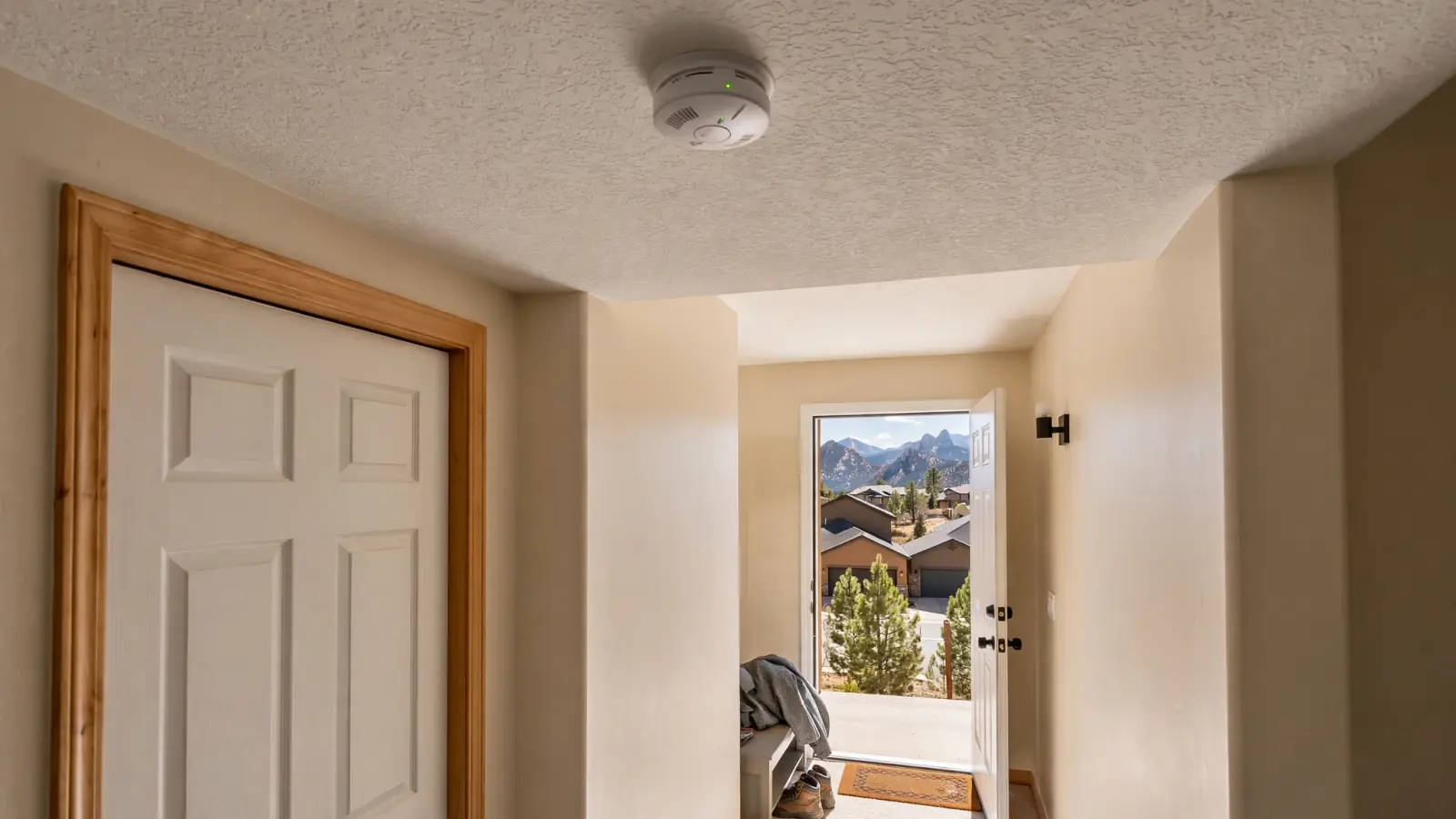
Who should leave
Who should stay elsewhere during cleanup
- Young children and infantsThey breathe faster and are closer to floors where residue settles.
- Pregnant peopleSmoke and fine particle exposure is a concern during pregnancy.
- Older adultsMore likely to have heart or lung conditions affected by smoke.
- People with asthma, COPD or heart diseaseResidue and fine particles can trigger symptoms.
- Pets, especially birdsAnimals are sensitive to airborne irritants; birds particularly so.
Wildfire smoke
Staying at home during and after wildfire smoke
Wildfire smoke is a different situation. While the smoke is outside, staying indoors with windows closed and a HEPA air cleaner running is usually safer than going out, and the EPA's guidance focuses on creating a clean room for that purpose. After the smoke clears, cleaning up ash and residue reduces ongoing exposure. Unless the house was damaged by fire or heat, and after replacing the furnace filter, most families can stay home while they clean, using the methods on the wildfire smoke damage page.
If you stay
How to stay more safely during cleanup
- 1
Close off damaged rooms
Shut doors to affected areas and seal them with plastic if the crew is working there.
- 2
Run HEPA air cleaners
Put a portable HEPA air cleaner in each bedroom and the main living area.
- 3
Change filters
Replace the furnace filter and keep the fan off until the ducts are checked.
- 4
Keep sensitive people elsewhere
Let them stay with friends or family until cleanup is done.
- 5
Avoid stirring residue
No dry sweeping, ordinary vacuums or box fans in sooty areas. [2]
- 6
Watch for symptoms
Coughing, headaches, dizziness or irritated eyes are signs to leave and get fresh air.
Where to go
Finding somewhere to stay
If you need to leave, many homeowners policies include coverage for additional living expenses while the home is unlivable; ask your insurer what applies and keep receipts. Renters insurance often includes similar coverage. Local relief agencies can help in the first days. The guide what to do after a house fire covers those first steps.
When to go back
Deciding when to move back in
It is reasonable to move back once the structure is sound, utilities are restored and checked, drying is complete, residue has been cleaned from living spaces, ducts are clean and the house no longer smells of smoke when closed up. Ask your contractor to confirm that rooms you will use are finished, not just those you can see. If anyone's symptoms return after moving back, tell the contractor; it often means a missed source.
Colorado Springs
Staying home in Colorado Springs after a fire
In Colorado Springs, two local factors affect the decision. In winter, a house without working heat can become dangerously cold, and pipes can freeze, so a house without safe heat is not livable whatever the smoke level. And after wildfires, utilities may restore gas home by home, which can leave a house without heat or hot water for days. If either applies, staying elsewhere is usually the practical choice even when smoke damage is light. Ask Colorado Springs Utilities when service will be restored and plan around it.
FAQ
Questions about staying after a fire
Can I sleep in my house after a small kitchen fire?
Possibly, if the fire department released it, smoke stayed in the kitchen area, utilities are safe and nobody in the house is especially sensitive. Close off the kitchen and run a HEPA air cleaner.
Is smoke residue harmful to breathe?
Fine particles and chemicals in residue can irritate the lungs and worsen asthma and heart conditions. Limit exposure, especially for sensitive people.
How long after a fire is the air safe?
There is no fixed time. Air improves as residue is removed and the house is ventilated and filtered. Cleaning, not waiting, is what makes the difference.
Should my kids stay in the house during smoke cleanup?
It is better for children to stay elsewhere until cleaning is finished, because they are more sensitive to smoke and residue.
Is it safe to stay home during wildfire smoke?
Usually yes, with windows closed and HEPA filtration, unless officials order an evacuation or the house is damaged.
What symptoms mean I should leave the house?
Coughing, wheezing, headaches, dizziness, nausea, chest pain or confusion. Leave, get fresh air, and seek medical care if symptoms are severe.
Is it safe to cook in a kitchen after a small fire?
Only after the stove, hood and nearby wiring have been checked and the kitchen has been cleaned of residue. Discard food that was exposed to heat or smoke.
Can pets stay in a house with smoke damage?
It is better to keep them elsewhere until cleaning is done. Pets are close to the floor where residue settles, and birds are especially sensitive.