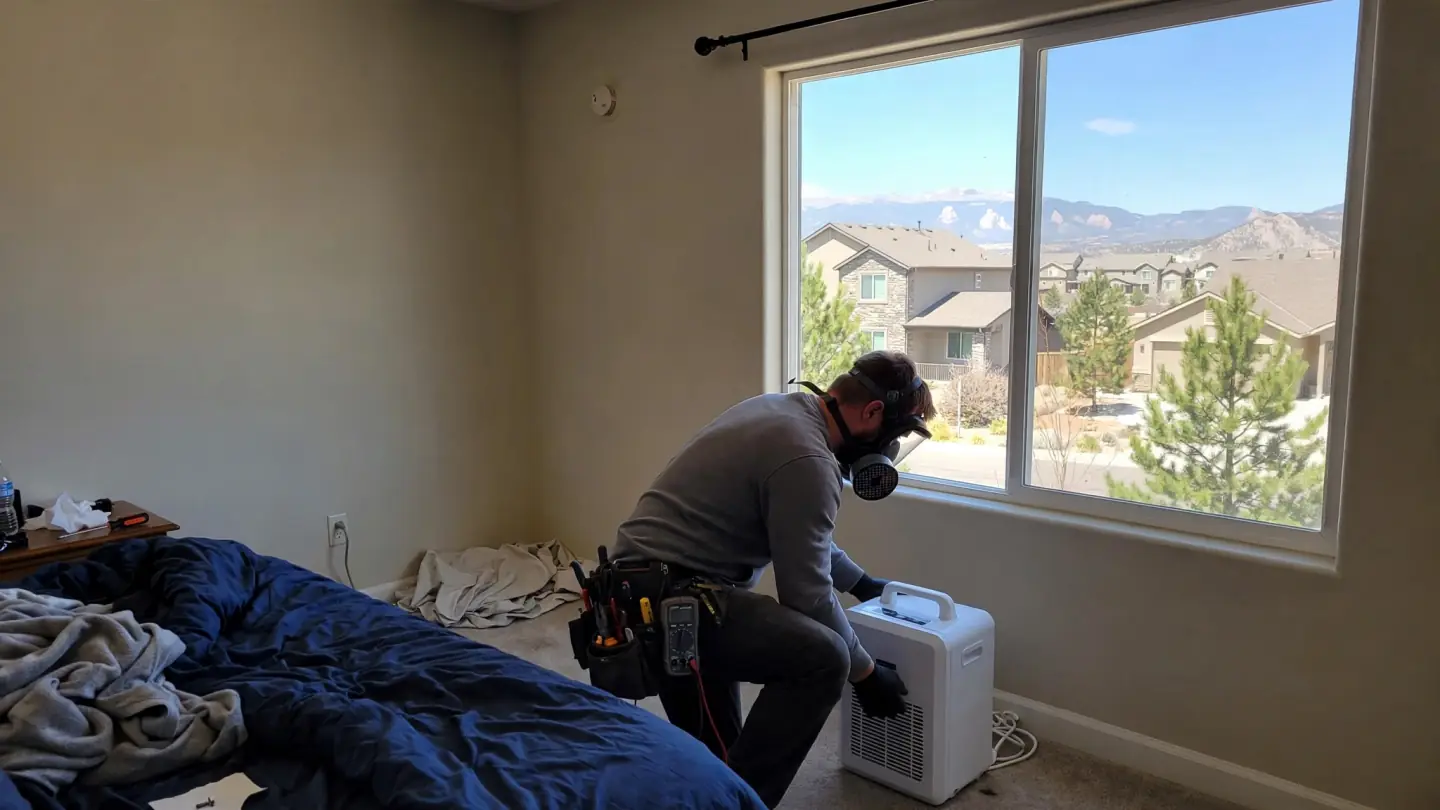
Key facts: Odor Removal
- Smoke odor comes from residue particles and gases absorbed into materials, so deodorizing without removing residue rarely lasts.
- Common hiding places are HVAC ducts, carpet pad, attic insulation, closets, cabinet interiors and upholstered furniture.
- The EPA says ozone generators sold as air cleaners can harm health and do not effectively remove most indoor pollutants.
- ANSI/IICRC S700 treats odor management as a step that follows source removal, not a substitute for it.
Where smell comes from
Why smoke smell lingers after the cleanup
What we experience as smoke odor is a set of chemical compounds released by burned materials. Some are gases that drift out of the house within days once windows are open. Others are attached to the tiny particles in smoke residue, and those particles lodge in porous materials: the fibers of carpet and drapes, the paper face of drywall, raw wood, foam cushions and insulation. As long as that residue stays, it keeps slowly releasing odor, especially when the house warms up or the air moves.
That is why a house can smell clean on a cool morning and smoky by late afternoon, and why odor often returns weeks after a quick cleaning. It is also why sprays, candles and plug-in fragrances do not solve the problem. They add a second smell on top of the first, and once they fade the smoke smell is still there.
Professional odor removal works in a fixed order: find every place the residue went, remove it through smoke damage cleanup and soot removal, clean or replace materials that cannot release it, and only then treat the air and remaining surfaces to neutralize what is left. Skipping straight to the last step is the most common reason smoke smell comes back.
Where it hides
The usual hiding places for smoke odor
Ductwork and furnace
Return ducts and the blower collect residue and spread odor every time the system runs.
Carpet pad
Smoke and firefighting water soak through carpet into the pad and subfloor, where cleaning cannot reach.
Attic insulation
Hot smoke rises into the attic through ceiling gaps and light fixtures and settles in loose fill and batts.
Closets and drawers
Closed spaces fill with smoke and then trap it; clothing, linens and the raw wood inside hold odor.
Cabinet interiors
Unfinished wood inside kitchen and bathroom cabinets absorbs odor and releases it when the doors open.
Upholstered furniture
Foam cushions act like sponges for smoke and often need specialist cleaning or replacement.
Process
How smoke odor removal is done
- 1
Find the sources
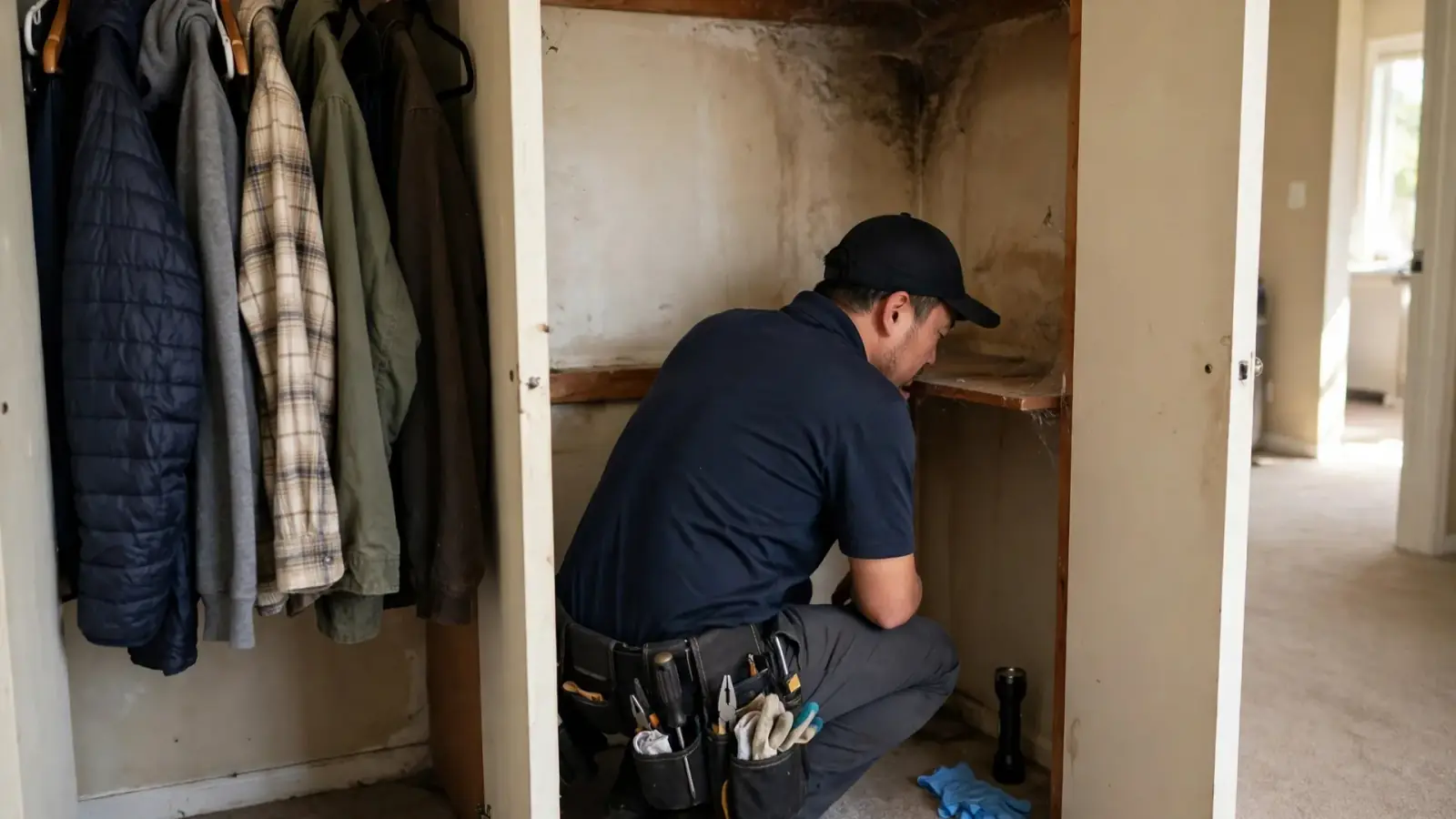
The contractor walks the house with you, opening closets, cabinets and the furnace, checking the attic and lifting a corner of carpet near the fire area.
- 2
Remove residue
Surfaces are cleaned with methods matched to the residue, ducts are cleaned if residue is present, and filters are replaced.
- 3
Take out what cannot be saved
Badly affected carpet pad, insulation, foam and some drywall are removed, because they will keep releasing odor.
- 4
Clean contents
Clothing, linens, drapes and furniture are cleaned on site or taken away for specialist cleaning.
- 5
Seal porous surfaces
Raw wood, framing and stained drywall are sealed with an odor-blocking primer where cleaning cannot reach the residue.
- 6
Treat the air
Air scrubbers, thermal fogging, hydroxyl generators or other treatments neutralize remaining odor molecules after the sources are gone.
- 7
Check in a closed house
The house is closed up and warmed for a day, then smelled again, room by room, before the job is called finished.
Treatment methods
Common odor treatments compared
| Method | How it works | Good for | Limits |
|---|---|---|---|
| HEPA air scrubbing | Pulls room air through fine filters, sometimes with activated carbon | Particles and some gases during and after cleaning | Does not reach residue inside materials |
| Thermal fogging | Heated deodorizer forms a fine fog that penetrates where smoke went | Hard-to-reach spaces and contents | House must be empty during treatment |
| Hydroxyl generators | Use UV light to create reactive molecules that break down odor compounds | Treating an occupied or partly occupied space over days | Slow; works on air and surfaces it reaches |
| Ozone treatment | Releases ozone that reacts with odor compounds | Unoccupied structures, used only by trained crews | Harmful to breathe; the EPA warns against it in occupied homes |
| Sealing primers | Lock residue into porous surfaces | Framing, raw wood, stained drywall | Only after cleaning; does not treat the air |
| Activated carbon | Absorbs odor molecules from air | Supplementing air scrubbers | Saturates and needs replacing |
Furnace and ducts
Smoke smell coming from the vents
A smell that is strongest when the furnace starts is a strong sign of residue in the return ducts, the blower compartment or the filter. Forced-air heating is the norm in Colorado Springs, and furnaces run for much of the year at this elevation, so this is one of the most common complaints after a fire, and after nearby wildfires, when smoky outdoor air was drawn in through the system or through gaps in the house.
Fixing it means replacing the filter, inspecting the blower and coil, and cleaning the ducts where residue is present. If the furnace was close to the fire, have it checked for heat damage before relighting. After the ducts are done, a higher-rated filter that your system can handle helps catch any remaining particles.
What to bring up
Details that help the contractor trace odor
- Where the fire started and what burned: food, furniture, wiring, a vehicle in the garage or something outdoors.
- Whether the furnace or air conditioning was running during or after the fire.
- Which rooms smell worst, and whether the smell changes with time of day or temperature.
- Whether firefighting water reached carpet, basements or lower floors.
- What cleaning has already been done, and with which products.
- Whether anyone in the house has asthma, allergies or other sensitivities to chemicals.
DIY or call
Smoke odor problems you can and cannot handle yourself
| Odor problem | Try yourself? | Why |
|---|---|---|
| Faint smell in a few washable items | Yes | Washing separately with an odor-neutralizing detergent and air-drying often works |
| Smell in a room after a small kitchen flare-up | Possibly | Degrease surfaces and ventilate; call if the smell persists after a week |
| Smell strongest when the furnace runs | No | Requires inspecting and cleaning the HVAC system |
| Smell in carpet or upholstery | Usually no | Residue sits in the pad and foam beyond reach of home equipment |
| Smell throughout the house after a fire | No | Needs source tracing, cleaning, removal and treatment |
| Smell after a wildfire with no fire in the house | Partly | Filters, HEPA vacuuming and laundry help; ducts and fabrics may need professional cleaning |
Wildfire smell
Smoke odor after a nearby wildfire
Colorado Springs has seen several wildfires along its edges, and smoke from fires across the West regularly drifts over the Front Range. Houses that were never touched by flames can still end up smelling of smoke, with fine ash on window sills and in garages. This kind of odor is usually spread thinly through the whole house rather than concentrated in one place.
The approach is similar but lighter: change filters, HEPA-vacuum floors and upholstery, damp-wipe hard surfaces, wash fabrics and clean the ducts if residue is present. The EPA's wildfire guidance recommends keeping windows closed and using portable HEPA air cleaners while outdoor air is smoky. [3] The wildfire smoke damage page covers the full process.
Health
Is the smell of smoke harmful?
Odor itself is a signal rather than a measurement. A faint smell does not mean the air is dangerous, and the absence of smell does not guarantee clean air. But a strong, persistent smoke smell indicates residue that is still releasing compounds, and people with asthma, COPD, heart conditions, and young children are the most likely to notice symptoms such as coughing, headaches or irritated eyes.
If someone in the household reacts to the smell, it is worth relocating them until cleanup is done. The guide is it safe to stay after a fire looks at that decision in more detail.
Local conditions
Odor removal in Colorado Springs homes
Local building patterns matter. Many houses on the north and east sides, such as those in Stetson Hills, have finished basements with carpet, attached garages and open main floors, which let smoke spread quickly through one large volume of air. Older west-side and downtown houses have more closed rooms, plaster walls and deep closets, which can confine smoke but also trap it. Homes in pine-heavy areas such as Black Forest often have wood paneling, log or timber elements and wood stoves, all of which absorb smoke readily.
The dry climate helps in one respect: there is less humidity to carry odor into materials over time, and ventilating on a clear day moves a lot of air. It does not replace cleaning, but it makes the final airing out more effective than in humid places.
Insurance and odor
Documenting odor for an insurance claim
Odor is real damage, but it is harder to photograph than soot. Write down which rooms and items smell, when the smell is strongest, and what has been tried. Keep affected clothing and fabrics rather than discarding them, and ask the contractor to note odor sources and the steps taken in their written scope.
If odor returns after work is finished, tell the contractor and your adjuster promptly. Persistent odor usually points to a missed source, and a follow-up inspection is normally the next step. Working with your insurance adjuster has more on documentation.
Repair versus replace
When an item or material should be replaced instead
Some materials hold smoke odor so deeply that cleaning only reduces it. Foam cushions, mattresses, carpet pad, insulation, and drywall that was soaked or heavily sooted fall into this group. Replacing them is often the only way to get rid of the smell entirely, and a contractor should be ready to explain why an item is on the replace list.
Hard goods, finished furniture, most clothing and many textiles respond well to professional cleaning. The decision should rest on what the item is made of and what testing shows, not on a blanket rule.
Prevention
Keeping smoke odor from coming back
Once a house has been cleaned and treated, a few habits help keep it fresh: replace the furnace filter on schedule, keep humidity steady, and avoid storing smoky items you have not yet cleaned inside the living space. On days when wildfire smoke is in the air, close windows, run the furnace fan only with a good filter, and use a portable HEPA cleaner in bedrooms.
If smell returns months later, especially in hot weather, it is usually a sign that one source was missed. That is common and fixable; call the contractor back rather than masking it.
The visit
What happens when an odor contractor visits
- 1
Questions first
The contractor asks what burned, when, and which rooms smell worst, and whether anyone in the household is sensitive to chemicals or fragrances.
- 2
A nose-first walk-through
They go room by room with the house closed, opening closets, cabinets and drawers, and noting where the smell intensifies.
- 3
Mechanical check
They look at the furnace filter, blower compartment and a return grille, and check the water heater and furnace area if the fire was nearby.
- 4
Under the surface
With your agreement, they may lift a carpet corner, look into the attic, or remove an outlet cover on an exterior wall to look for residue.
- 5
A written plan
You get a written description of sources found, what will be cleaned, removed or sealed, and which air treatment will follow, with timing.
- 6
Agreement on how the house is used
You and the contractor agree whether anyone stays in the house during the work and when rooms can be reoccupied.
Why it fails
Why some odor jobs fail, and how to avoid it
When smoke odor removal fails, the cause is nearly always the same: a source was missed or a step was skipped. The most common misses are the return-air ducts, the carpet pad under a cleaned carpet, insulation above the fire room, the inside of wall cavities on exterior walls, and contents that were cleaned and then stored back in a closet that was never cleaned itself. Another frequent cause is treating the air before cleaning, which gives a few pleasant days and then a slow return of the smell.
You can protect yourself by asking for the plan in writing, by asking where the contractor expects residue to be hiding in your particular house, and by asking how they will check the result. A closed-house check after a day or two of normal heating is a fair test; a house that only smells clean with the windows open is not finished.
It also helps to keep a simple log for a couple of weeks after the work: note the date, the room and whether you smell smoke, and whether the furnace was running or the day was warm. Patterns in that log point the contractor straight to the missed source if the smell returns.
Belongings
Handling smoky belongings while odor work goes on
- Clothing and linensBag them in clear plastic by room so they can be cleaned in batches; avoid hot dryers, which can set odor in some fabrics.
- Books and papersAir them in a clean, dry space. Important documents can be copied or scanned; heavily smoked paper may need specialist deodorization.
- Mattresses and pillowsFoam and fiber fill absorb smoke deeply. Many are replaced; ask the contractor and adjuster before discarding.
- ElectronicsKeep them unplugged and away from the work area. Residue inside the case can carry odor and corrode parts.
- Food and medicineDiscard food and medicine exposed to heat, smoke or firefighting water. Sealed cans that were exposed to heat should be discarded too.
- Children's toysHard toys can be washed; plush toys are cleaned like clothing or replaced.
Sealing
Sealing surfaces that still hold odor
After cleaning, some surfaces still carry a trace of residue deep in their pores: raw framing in the attic, the backs of trim, unfinished wood inside cabinets, and drywall paper that was heavily sooted. Rather than scrub them again and again, restorers often seal them with a primer designed to block stains and odor. Shellac-based and some specialty primers lock residue in place so it cannot release odor into the room.
Sealing is the right step only after cleaning, and only on surfaces where some residue cannot be removed. It is not a shortcut, and a contractor should be able to show you which surfaces were sealed and why. In a rebuild, framing is often sealed before new insulation and drywall go in, which prevents a faint smell from returning once the walls are closed.
Pets and odor
Pets, sensitive people and odor treatments
Some odor treatments are not suitable while people or animals are in the house. Thermal fogging and ozone require an empty building, and even hydroxyl units and cleaning products can bother people with chemical sensitivities. Birds are especially sensitive to airborne irritants. Plan for pets and sensitive family members to stay elsewhere during treatment, and ask the contractor exactly when it is safe for them to come back.
FAQ
Smoke odor removal questions
How long does it take to get rid of smoke smell?
A light odor after a small fire may clear in a few days with cleaning and ventilation. Whole-house odor after a larger fire usually takes as long as the cleanup itself, plus a few days of treatment and a closed-house check.
Do air purifiers remove smoke smell?
A HEPA air purifier captures particles and one with activated carbon absorbs some gases, which helps. Neither removes residue stuck in carpet, fabrics or ducts, so they work best alongside cleaning.
Is ozone safe for smoke odor?
Ozone is a lung irritant. The EPA warns against ozone generators in occupied spaces. Professionals who use it do so only in empty buildings and air the house out before people return.
Why does the smoke smell come back on hot days?
Heat makes residue in materials release more odor. Smell that returns in warm weather usually means a source, such as insulation, carpet pad or ductwork, was not fully removed.
Can smoke smell be removed from clothes?
Many clothes respond to washing with an odor-neutralizing detergent and air-drying. Heavily affected, delicate or valuable items are better handled by specialist textile cleaners.
Should I paint over smoke smell?
Only after the surface is cleaned, and then with an odor-blocking primer first. Ordinary paint over residue lets smell and stains come through.
Does homeowners insurance cover smoke odor removal?
Many policies cover smoke damage from a covered fire, including odor, but terms vary. Report it promptly, document what smells and ask your adjuster.
Can wildfire smoke odor get into my house without a fire?
Yes. Smoke and fine ash enter through gaps, vents and the HVAC system. Filters, HEPA vacuuming, laundry and duct cleaning usually resolve it.