Key facts: Smoke odor that won't go away
- Lingering smoke smell comes from residue that is still in the house, usually in ducts, carpet pad, insulation, closets or fabrics.
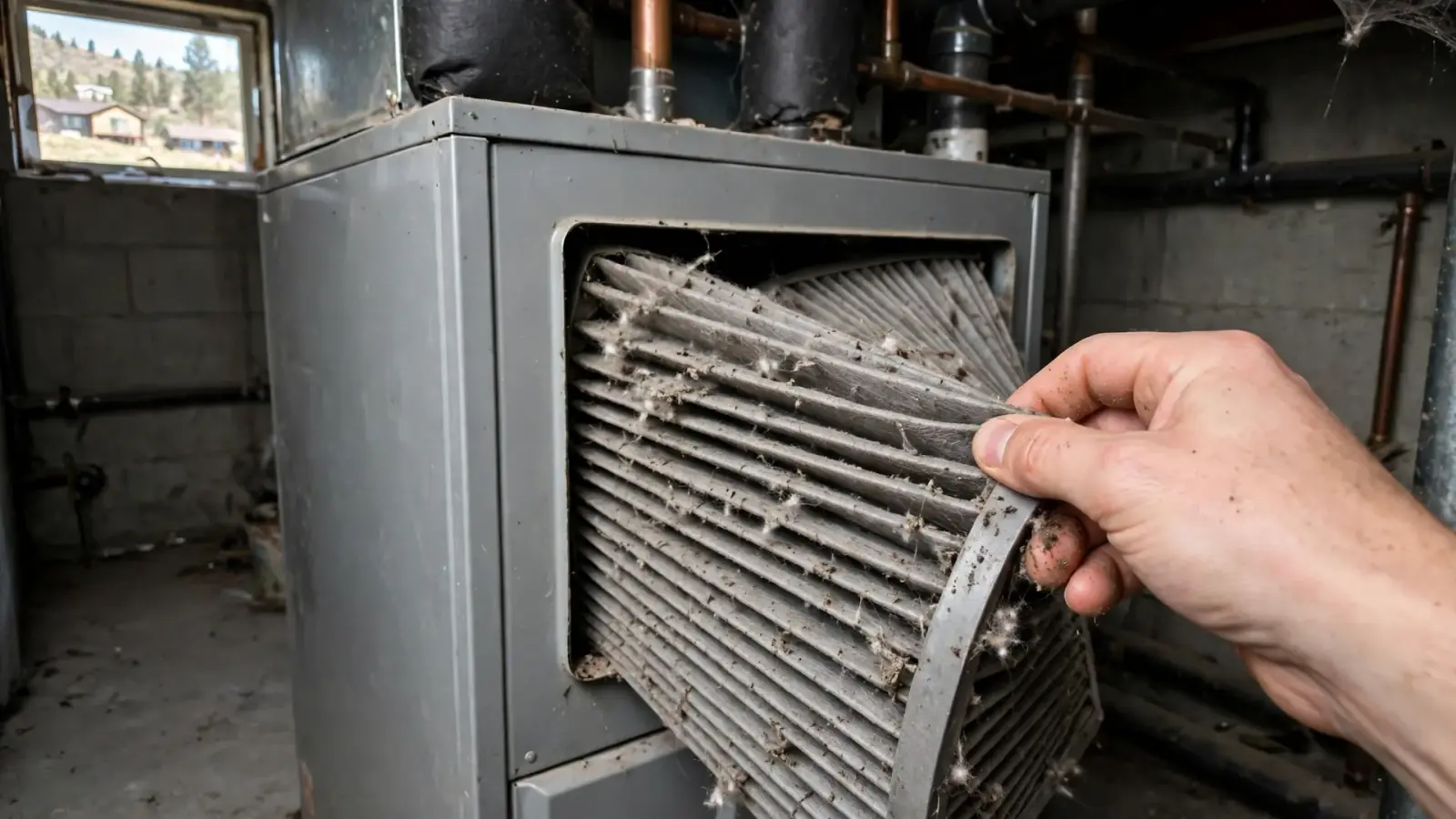
- Odor that is worse when the furnace runs points to residue in the HVAC system.
- Odor that is worse on warm days points to residue in porous materials that release more odor as they warm.
- The EPA warns that ozone generators can harm health and are not effective at removing most indoor pollutants.
Why it lingers
Why smoke smell outlasts the cleaning
Smoke smell is chemistry, not just air. Burning releases odor compounds, and many of them stick to the particles in smoke residue. Those particles lodge in porous materials, including carpet, carpet pad, upholstery foam, raw wood, drywall paper and insulation, and slowly release odor for weeks or months. Surface cleaning removes what you can see but often leaves residue in these deeper places.
That is why sprays, candles and plug-in fresheners do not work: they cover the smell for a while and then fade. Lasting odor removal means finding the residue and removing, cleaning or sealing the material that holds it. Odor removal describes the professional process.
Clues
What the timing of the smell tells you
| When it smells worst | Likely source | What to check |
|---|---|---|
| When the furnace or AC starts | Ducts, blower, filter | Replace the filter; inspect the return and blower |
| On warm afternoons | Porous materials: carpet pad, insulation, wood | Rooms nearest the fire; attic; under carpet |
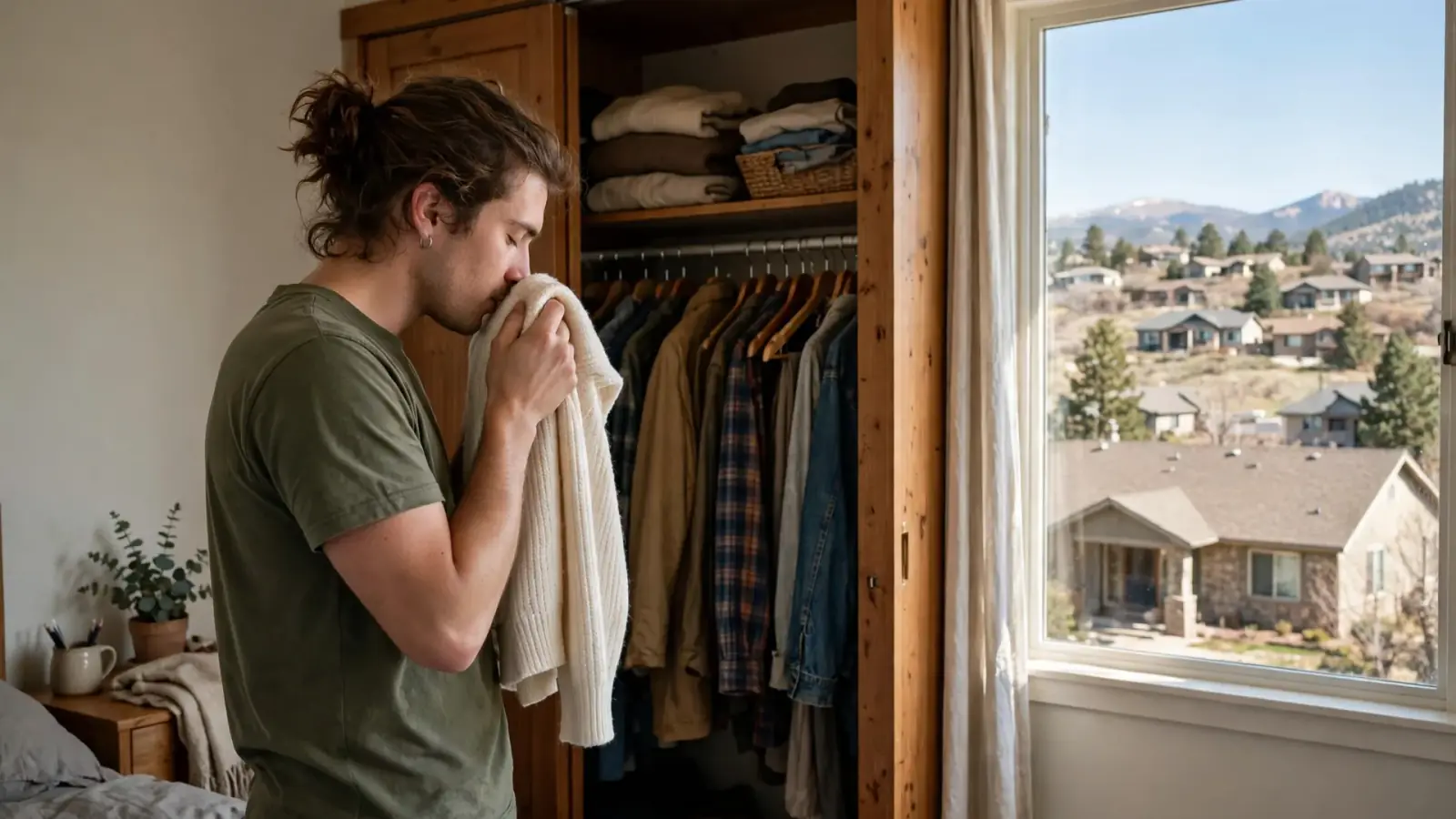
| When opening closets or cabinets | Closed spaces and their contents | Clothing, linens, raw wood interiors |
| After walking on carpet | Carpet pad and subfloor | Lift a corner near the fire area |
| In one room only | Something in that room | Upholstery, mattress, drapes, outlets on exterior walls |
| Upstairs more than downstairs | Attic and upper ceilings | Attic insulation and framing |
Hiding places
The places smoke odor hides most often
- HVAC ducts and blowerResidue drawn into the return side spreads odor every time the system runs.
- Carpet padSmoke and firefighting water soak through carpet into the pad, where surface cleaning cannot reach.
- Attic insulationHot smoke rises through ceiling gaps and settles in insulation above the fire area.
- Wall cavitiesSmoke is drawn into walls through outlets and switch boxes, especially on exterior walls.
- Closets and cabinetsClosed spaces trap smoke; raw wood interiors and stored fabrics hold it.
- Upholstered furniture and mattressesFoam acts like a sponge and is very hard to deodorize.
Find it
How to track down a lingering smoke smell
- 1
Close the house up
Shut windows and run the heat normally for a day, then walk through room by room, noting where the smell is strongest.
- 2
Change the filter
Replace the furnace filter and note whether the smell changes when the system runs.
- 3
Open closed spaces
Open each closet, cabinet and drawer and smell inside.
- 4
Check soft goods
Smell upholstery, mattresses, drapes and rugs; move suspect items to the garage for a day and see if the room improves.
- 5
Look up and down
Check the attic hatch area and lift a carpet corner near the fire area, if you can do so safely.
- 6
Write it down
Record what you found and share it with the contractor; it saves time and points straight to the missed source.
Fixes
What actually removes lingering smoke odor
Once the source is found, the fix depends on the material. Ducts are cleaned and filters replaced as part of smoke damage cleanup. Carpet pad is replaced and the subfloor cleaned and sealed if needed. Insulation is removed and replaced. Closets and cabinets are cleaned and raw wood sealed with an odor-blocking primer. Fabrics are washed or professionally cleaned, and foam items are often replaced.
After the sources are removed, air treatment such as HEPA filtration with activated carbon or hydroxyl generators can neutralize what remains. The test of success is simple: close the house for a day or two of normal living and see whether the smell returns.
Wildfire odor
Lingering odor after wildfire smoke
After a wildfire, the smell is usually spread thinly through the whole house rather than concentrated in one place. Filters, carpet, upholstery and fabrics hold most of it, and the attic and garage often hold ash. The wildfire smoke damage page explains how to clean it, starting with filters, HEPA vacuuming and damp wiping.
Colorado Springs homes
Lingering odor in Colorado Springs homes
Forced-air furnaces run for much of the year at Colorado Springs elevations, so ducts are the most common hiding place for smoke odor here. Many local homes also have finished basements with carpet, where firefighting water and smoke residue soak into the pad, and attached garages that share air with the house. If your home has these features, check them early when tracing a smell. Older houses in the Old North End and on the west side add closets under stairs, attics and old duct runs to the list.
FAQ
Lingering smoke odor questions
Why does my house still smell like smoke after cleaning?
Residue remains somewhere, most often in ducts, carpet pad, insulation, closets or upholstery. Finding and removing that source is the fix.
Will smoke smell go away on its own?
Light odor may fade with ventilation, but odor held in porous materials can last for months or longer without cleaning or removal.
Why is the smoke smell worse on hot days?
Warmth makes residue in materials release more odor. A smell that returns in heat points to a missed source in porous materials.
Do air purifiers help with smoke smell?
HEPA purifiers with activated carbon help reduce particles and some odor, but they cannot remove residue stuck in materials.
Can painting get rid of smoke smell?
Only after cleaning and with an odor-blocking primer first. Ordinary paint over residue lets the smell come through.
Is it worth calling a professional for lingering odor?
If the smell persists after a week of cleaning and filter changes, a professional can trace sources you cannot easily reach, such as ducts and wall cavities.
Can smoke smell come from inside the walls?
Yes. Smoke is pulled into wall cavities through outlets and gaps, and residue there keeps releasing odor. Dark marks around outlets are a clue.
Does vinegar or baking soda remove smoke smell?
They can absorb some odor from small items and surfaces, but they will not remove residue in ducts, pad, insulation or wall cavities.
How do I know if the ducts are the problem?
If the smell surges when the furnace or AC starts, or the filter turns gray quickly, residue in the ducts or blower is likely.