Key facts: Contents Pack-Out and Cleaning
- A pack-out inventories, photographs, packs and removes belongings so the house can be cleaned and repaired without them in the way.
- Each box is labeled by room and logged, which gives the homeowner and the insurer a detailed record of contents.
- Hard, non-porous items usually clean well; porous items such as mattresses and foam may not, depending on residue and water exposure.
- Colorado's Division of Insurance notes that inventories matter for contents claims, and keeping receipts and records helps.
What it is
What a contents pack-out is and when it makes sense
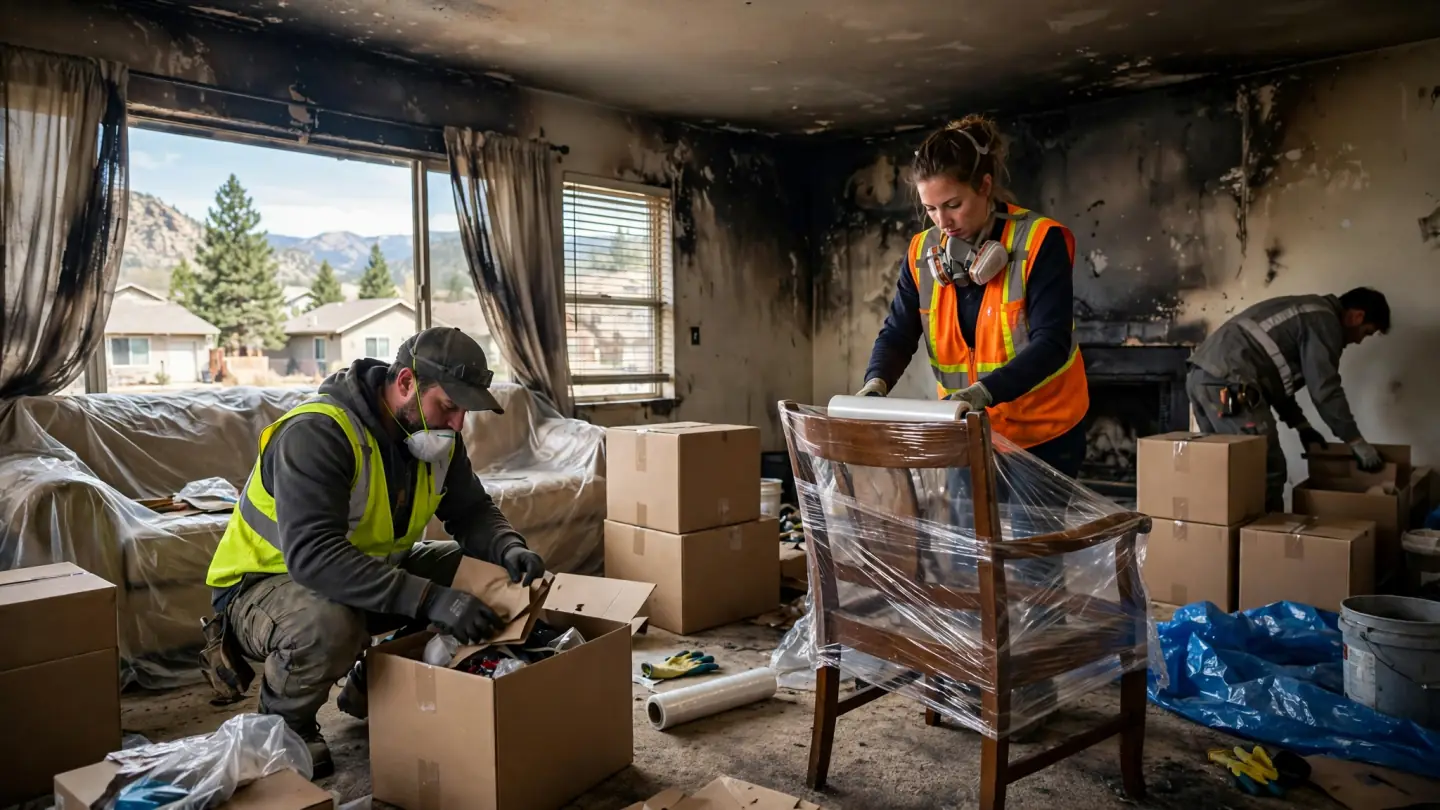
A pack-out is the organized removal of belongings from a fire-damaged house. A crew works room by room, photographing items in place, listing them, packing them in labeled boxes or wrapping them, and moving them to a facility where they are cleaned and stored. Items that cannot be saved are photographed and listed too, so they are part of the record even if they are discarded.
A pack-out makes sense when the house needs significant cleaning or repair and belongings would be in the way or at risk of further damage. It also makes sense when many items need specialist cleaning that cannot be done in the house. For a small kitchen fire with light smoke in one room, cleaning contents in place may be enough. For a fire that sent smoke through the whole house, or one that left firefighting water in several rooms, a pack-out is usually the practical choice.
Pack-out sits alongside the work on the structure: smoke damage cleanup, soot removal and water damage from firefighting. Contents return when the house is clean, dry and repaired, so they are not contaminated again.
When to consider it
Signs a pack-out is the better choice
Smoke through the whole house
If every room smells or shows film, cleaning belongings in place while the walls are being cleaned is slow and risks re-soiling them.
Water on floors
Furniture and boxes sitting on wet carpet absorb water and stain; moving them out stops that damage.
Major repairs ahead
If walls, ceilings or floors will be removed, contents have to go somewhere safe.
Many delicate items
Artwork, electronics, documents and heirlooms often need specialist cleaning off-site.
House unsecured or empty
An empty, damaged house is a risk for valuables; storage is safer.
Claim documentation
A detailed, photographed inventory supports the contents part of an insurance claim.
Process
How a fire contents pack-out works
- 1
Walk-through with you
The contractor walks the house with you to identify valuables, sentimental items, things you need right away and anything that should not be moved.
- 2
Set aside essentials
Medicines, documents, work items, school items and clothing you need while displaced are separated and given to you first.
- 3
Photograph in place
Rooms and items are photographed before anything moves, which records condition and location.
- 4
Inventory and pack
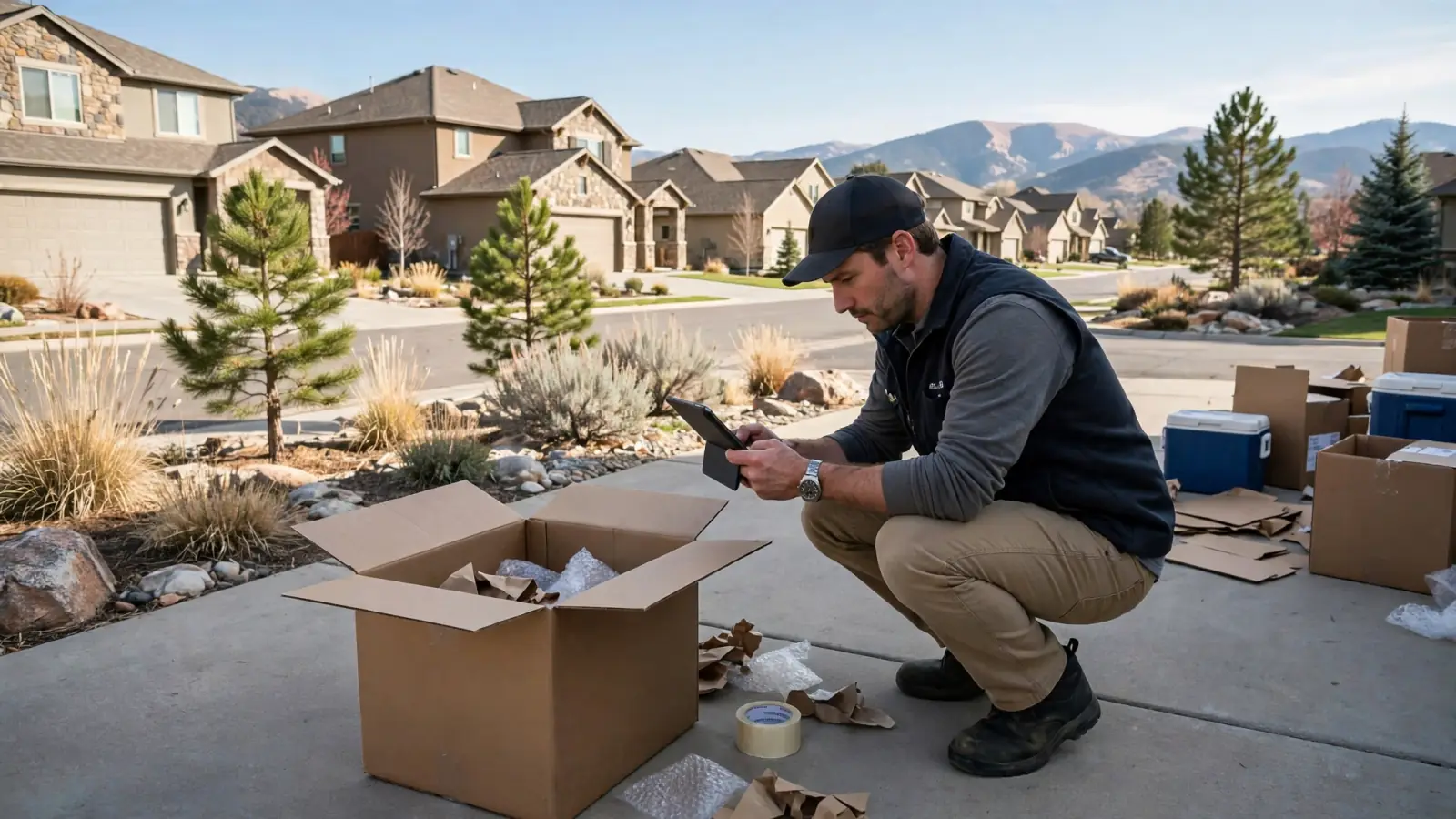
Items are listed, packed in labeled boxes by room, and fragile pieces wrapped. Electronics, art and documents are packed separately.
- 5
Sort salvageable and non-salvageable
Items that clearly cannot be restored are listed and photographed, and kept or discarded according to your insurer's guidance.
- 6
Transport and clean
Contents are moved to a facility and cleaned with methods suited to each material, including laundering, dry cleaning, ultrasonic cleaning and deodorization.
- 7
Store and return
Cleaned items are stored in sealed containers until the house is ready, then delivered and unpacked by room.
Cleaning by category
How different belongings are usually cleaned after a fire
| Category | Common methods | Often restorable? |
|---|---|---|
| Clothing and linens | Laundering with odor-neutralizing detergents, specialist dry cleaning | Usually yes |
| Hard goods (dishes, glass, metal, ceramics) | Hand cleaning or ultrasonic cleaning | Usually yes |
| Wood furniture | Dry sponging, cleaning, conditioning, odor treatment | Often yes |
| Upholstered furniture | HEPA vacuuming, upholstery cleaning, deodorization | Sometimes; depends on residue and water |
| Mattresses and pillows | Limited options | Often not after heavy smoke or water |
| Electronics | Professional inspection and cleaning | Sometimes; corrosion risk |
| Books and documents | Air-drying, freezing wet items, deodorization | Often, if handled early |
| Photographs and artwork | Specialist conservation cleaning | Often partly; depends on exposure |
Electronics
Electronics and appliances after smoke exposure
Smoke residue on electronics is more than a cosmetic problem. Some residues are acidic and can corrode circuit boards and contacts over time, and fine soot can get inside cases through vents. Televisions, computers, game consoles, audio equipment and small appliances near the fire are especially exposed. Heat can also damage components and batteries.
Keep electronics unplugged and do not power them on until they have been checked. Specialist electronics cleaning can restore some items; others are better replaced. Damaged lithium-ion batteries, including those in laptops, phones, power tools and e-bikes, can be a fire hazard; handle them carefully and follow local guidance on disposal. Back up data from devices that still work as soon as it is safe to do so.
Documents and photographs
Rescuing documents, photographs and keepsakes
Paper and photographs are among the most important and most vulnerable things in a house. Soot and smoke stain them; firefighting water swells and molds them. [6] Wet paper and photographs can often be stabilized by freezing them, which stops mold and buys time for professional drying. Dry, smoky documents can be deodorized, and important records can be copied or scanned.
Ask the contractor to pack these items separately and to tell you how they will be handled. Some items, such as old photographs and artwork, may need a conservator. For government documents such as passports and birth certificates, the U.S. Fire Administration's guidance after a fire includes information on replacing vital records.
Prepare
How to prepare for a pack-out
- Make a list of irreplaceable items and where they are in the house.
- Set aside what you need for the next few weeks: medicines, documents, work and school items, chargers, clothing.
- Tell the contractor about firearms, valuables, cash, collections and anything hazardous before packing begins.
- Ask how items will be labeled and how you can find something in storage if you need it.
- Ask for a copy of the inventory and photos, and check it against your own memory of each room.
- Ask your insurer whether they want to see items before they are discarded.
Inventory and claims
Why the contents inventory matters for your claim
Contents claims depend on lists. Insurers generally ask policyholders to identify what was damaged or destroyed, and a pack-out inventory with photographs is a strong starting point. Add to it from memory, receipts, bank and card statements, online order histories, and photos and videos from before the fire.
Colorado's Division of Insurance has issued guidance for policyholders after wildfires that addresses contents inventories, including rules for some declared wildfire disasters that limit when a full inventory is required. Read your policy, ask your insurer what they need, and keep copies of everything you send. Working with your insurance adjuster has more detail on preparing for the adjuster.
Pack-out or clean in place
Comparing contents pack-out with cleaning in place
| Factor | Clean in place | Pack-out |
|---|---|---|
| Extent of smoke | One or two rooms, light film | Whole house, moderate to heavy |
| Water damage | None or minimal | Wet floors or several rooms |
| Repairs planned | Light cleaning and paint | Drywall, flooring or framing work |
| Living situation | Family stays in the house | Family relocates during repairs |
| Delicate items | Few | Many needing specialist cleaning |
| Documentation | Photos by room | Itemized inventory with photos |
Textiles
Clothing, bedding and other fabrics
Fabrics are filters, and after a fire they hold both particles and odor. Most washable clothing and bedding can be restored with repeated washing using detergents designed to break down smoke residue, and air-drying between cycles helps judge whether the smell is gone. Delicate fabrics, wool, silk, leather, wedding dresses, uniforms and heirloom textiles are better handled by specialist cleaners familiar with fire residue.
If you wash some items yourself, wash them separately from unaffected laundry, avoid high dryer heat until the smell is gone, and clean the washer afterward. Keep a list of what you clean yourself so it can be included in your records.
Furniture
Wood and upholstered furniture after a fire
Finished wood furniture usually responds well to cleaning. Soot is lifted with dry sponges, the finish is cleaned and conditioned, and drawers and the backs of pieces are cleaned and deodorized because raw wood holds odor. Antique and fine furniture may need a furniture restorer, especially if heat damaged the finish.
Upholstered furniture is harder. Light smoke may be removed with HEPA vacuuming and upholstery cleaning, but foam cushions absorb odor deeply, and furniture soaked with sooty water is rarely worth restoring. A contractor can test a piece before committing to clean it.
Colorado Springs considerations
Contents work in Colorado Springs homes
Several local patterns shape contents work here. Many households in the city have a connection to the military bases around Colorado Springs, and uniforms, medals and service records are among the items families most want saved. Homes in the foothills and in Black Forest often have outbuildings and garages full of tools, equipment and stored belongings that also need sorting after a fire. And the dry climate means smoky items stored in garages and attics can stay dusty and odorous for a long time if they are not cleaned.
After a wildfire, contents may have smoke and ash damage without any fire inside the house. In that case, contents cleaning is often the largest part of the job; the wildfire smoke damage page describes the wider process.
Storage and return
Storage while the house is repaired
Cleaned contents are usually stored in sealed containers or vaults at the contractor's facility until the house is ready. Ask where items will be stored, whether the storage is climate-controlled, and how you can retrieve something if you need it. Keep your own copy of the inventory so you know what is in storage.
When the house is cleaned and repaired, contents are delivered and placed by room according to the labels. Check items as they come back, especially electronics and delicate pieces, and note any problems promptly.
Choosing a contractor
Questions to ask about contents pack-out
Ask how the contractor inventories items and whether you get a copy with photos; how they clean different categories of belongings; whether textiles and electronics are cleaned in-house or sent to specialists; where items are stored and how secure that storage is; how you retrieve items during storage; and how they handle items you want kept even if they cannot be restored.
The ANSI/IICRC S700 standard includes contents restoration as part of professional fire and smoke damage work, which is a useful reference point when comparing approaches. [2]
On the call
What happens when you call about contents
- 1
Describe the loss
Explain where the fire was, which rooms have smoke or water, and roughly how full the house is. Mention any large collections, pianos, safes or gun cabinets.
- 2
Talk through timing
Discuss when the house can be entered, whether structural cleaning or drying is starting soon, and where you are staying.
- 3
Walk-through
At the visit, the contractor walks the house with you and agrees what will be packed, cleaned in place or listed as not restorable.
- 4
Packing day
The crew packs by room. You can be present to point out important items and answer questions.
- 5
Updates
You are told when categories of items are cleaned and how to request an item from storage.
Special items
Belongings that need special handling
- Firearms and ammunitionTell the contractor in advance. Many crews will not pack them, so plan to remove and store them yourself in line with the law.
- MedicationsDiscard medicines exposed to heat, smoke or water, and ask your pharmacist about replacements.
- Musical instrumentsPianos, guitars and other wooden instruments react to heat and moisture and may need a specialist technician.
- Collections and memorabiliaCoins, stamps, sports memorabilia and similar items should be listed individually and packed separately.
- Jewelry and cashRemove these yourself whenever possible and keep them with you or in a secure place.
- Hazardous productsPaints, solvents, fuel, pool chemicals and pesticides are not packed with household goods and need appropriate disposal if damaged.
Living while displaced
Living out of a suitcase while contents are cleaned
Most families whose contents are packed out are also living somewhere else while the house is repaired. That makes the first sort important: everything you need day to day should come out of the house before packing starts, and the contractor should know how to reach you if a question comes up about an item. Clothing you need right away can often be cleaned first and returned within days.
Keep receipts for clothing, toiletries and other items you have to buy while displaced. Many policies include coverage for additional living expenses when the house cannot be lived in; your insurer can tell you what applies to you and what records they need. Colorado's Division of Insurance publishes guidance on living expense coverage after wildfires and other disasters.
It also helps to keep a running list of things you discover you are missing during the weeks away from home. Those small items, such as a phone charger, a child's school folder or a favorite pan, are easy to forget when the full inventory is reviewed, and they belong in the record just as much as furniture does.
Kitchens
Kitchen contents after a cooking fire
Kitchens hold more individual items than any other room, and after a cooking fire they are usually the most contaminated. Dishes, glassware, pots and utensils inside closed cabinets often clean up well, while items on open shelves and counters carry grease-laden residue. Small appliances near the stove may have heat damage and are usually checked before use. Plastic storage containers and wooden cutting boards absorb odor and are often replaced.
Food is a simple rule: discard anything exposed to heat, smoke, soot or firefighting water, including food in the refrigerator if the power was off, and canned goods that were heated. Dry goods in sealed glass jars may be fine if they were well away from the fire, but when in doubt, throw them out and note them for your records. Spices, oils and open packages absorb smoke readily.
Children's rooms
Toys, school items and children's belongings
Children's rooms raise their own questions. Hard plastic toys can usually be washed. Stuffed animals and fabric toys are cleaned like clothing or replaced; a favorite one may be worth specialist cleaning. Car seats exposed to fire, heat or heavy smoke are commonly replaced, and the seat manufacturer's guidance should be followed. Cribs, mattresses and bedding in a smoky room are often replaced because of how close children sleep to them.
School items, books and electronics a child needs right away should be in the first group pulled out before packing. Let the contractor know what matters most to your children; small familiar items can make a long displacement easier.
Rugs
Area rugs and carpets removed from the house
Area rugs, especially wool and hand-knotted rugs, are worth cleaning separately from wall-to-wall carpet. They hold smoke odor and soot deep in the pile and foundation, and they can be damaged by the wrong cleaning method. Specialist rug cleaners wash them in controlled conditions and dry them properly, which is difficult to do in a house under restoration. Roll them pile-in, label them by room and include them in the inventory.
FAQ
Contents pack-out questions
What is a contents pack-out after a fire?
It is the inventory, packing and removal of belongings from a fire-damaged home so they can be cleaned and stored while the house is repaired.
Can smoke-damaged clothes be saved?
Most washable clothing can be restored with repeated washing using odor-neutralizing detergents. Delicate and valuable items are better handled by specialist cleaners.
How long does a pack-out take?
Packing a house usually takes from a day to several days depending on size and contents. Cleaning and storage continue until the house is ready, which may be weeks or months.
Will I get a list of my belongings?
You should. Ask for an itemized inventory with photos and labels by room, and keep your own copy.
Should I throw away smoke-damaged items?
Not before documenting them. Photograph and list them, and check with your insurer before discarding.
Can electronics be cleaned after smoke damage?
Some can, by specialists. Keep them unplugged and do not turn them on until they have been checked, because residue can cause corrosion.
What happens to wet documents and photographs?
Wet paper and photos can often be frozen to stop mold and then dried professionally. Pack them separately and tell the contractor which are important.
Can I get items out of storage during the repair?
Usually yes. Ask the contractor how retrieval works before items are packed.
Can books be saved after smoke damage?
Many can. Dry, smoky books are aired and deodorized; wet books can be frozen to stop mold and then dried by specialists.
Sources and citations
- [1]Colorado Division of Insurance — Consumer protections for Coloradans affected by wildfires (2026)
- [2]IICRC — ANSI/IICRC S700 Standard for Fire and Smoke Damage Restoration
- [3]U.S. Fire Administration — After a fire
- [4]U.S. Fire Administration — After the Fire: Returning to Normal (FA-46)
- [5]U.S. EPA — Wildfires
- [6]U.S. EPA — A brief guide to mold, moisture and your home