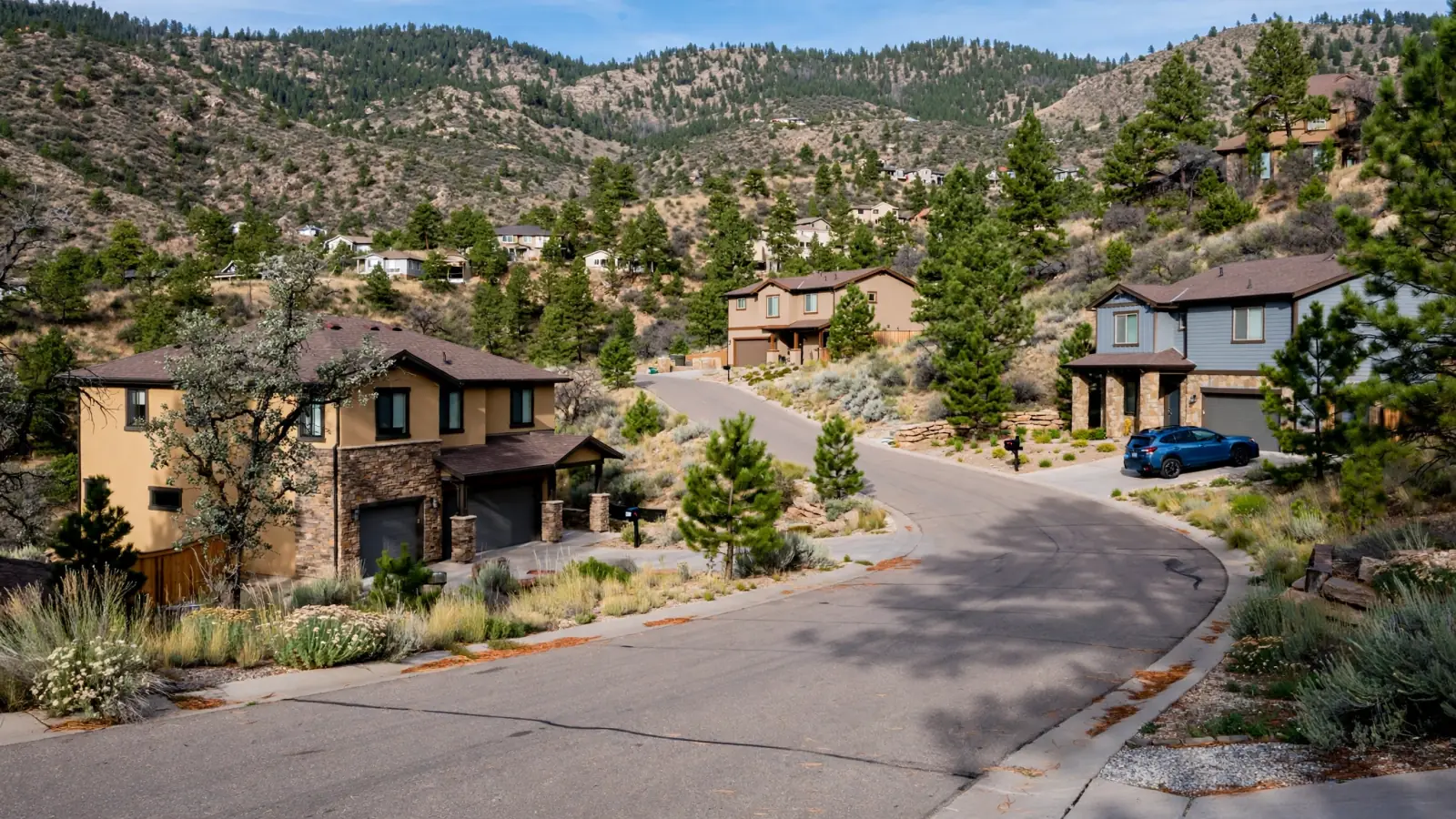
Key facts: Soot Removal in Mountain Shadows
- Soot is lifted with HEPA vacuums and dry soot sponges before any liquid cleaner touches the surface.
- Tall vaulted ceilings in Mountain Shadows great rooms collect the heaviest soot and need scaffolding or tall ladders to reach.
- Attached garages on hillside lots often sit below living space, so garage soot can reach the rooms above.
- Oily soot from plastics, tires and fuel is harder to remove than dry soot from wood and paper.
Where soot lands
Where soot collects in northwest-side houses
Soot condenses on the coolest surfaces closest to the fire, and in a vaulted house that means the ceiling and the top of the walls. In Mountain Shadows great rooms those surfaces can be two stories up, with skylights, ceiling fans and clerestory windows in the way. Black strings in the peak of the vault, stripes along the ceiling framing and a dark band where wall meets ceiling are all common after a fire that started on the main floor.
Hillside garages add a different pattern. Many homes on sloping lots have the garage tucked under a bedroom or bonus room. A vehicle, battery pack or workbench fire there produces dense, oily soot that pushes through the door into the house and up through any gaps in the ceiling. That oily residue is the hardest kind to lift and is explained on the main soot removal page.
Surfaces
Mountain Shadows surfaces and how soot comes off them
- Vaulted drywall ceilingsDry-sponged in long overlapping passes from scaffolding, then cleaned; large smooth surfaces show streaks, so sealing and paint are common after heavy soot.
- Stone and tile fireplace surroundsVacuumed, then cleaned with products made for porous masonry; natural stone may keep slight shading.
- Fiber-cement and vinyl exteriorsSoot from a neighbor's fire or a deck fire is washed at low pressure; warped or melted pieces are replaced.
- Garage drywall and ceilingOften replaced when soot is oily and heavy, especially on the wall shared with the house.
- Window glass and framesCleaned early, because acidic residue can etch glass and dull metal frames.
Exterior soot
Soot on decks and siding after a nearby fire
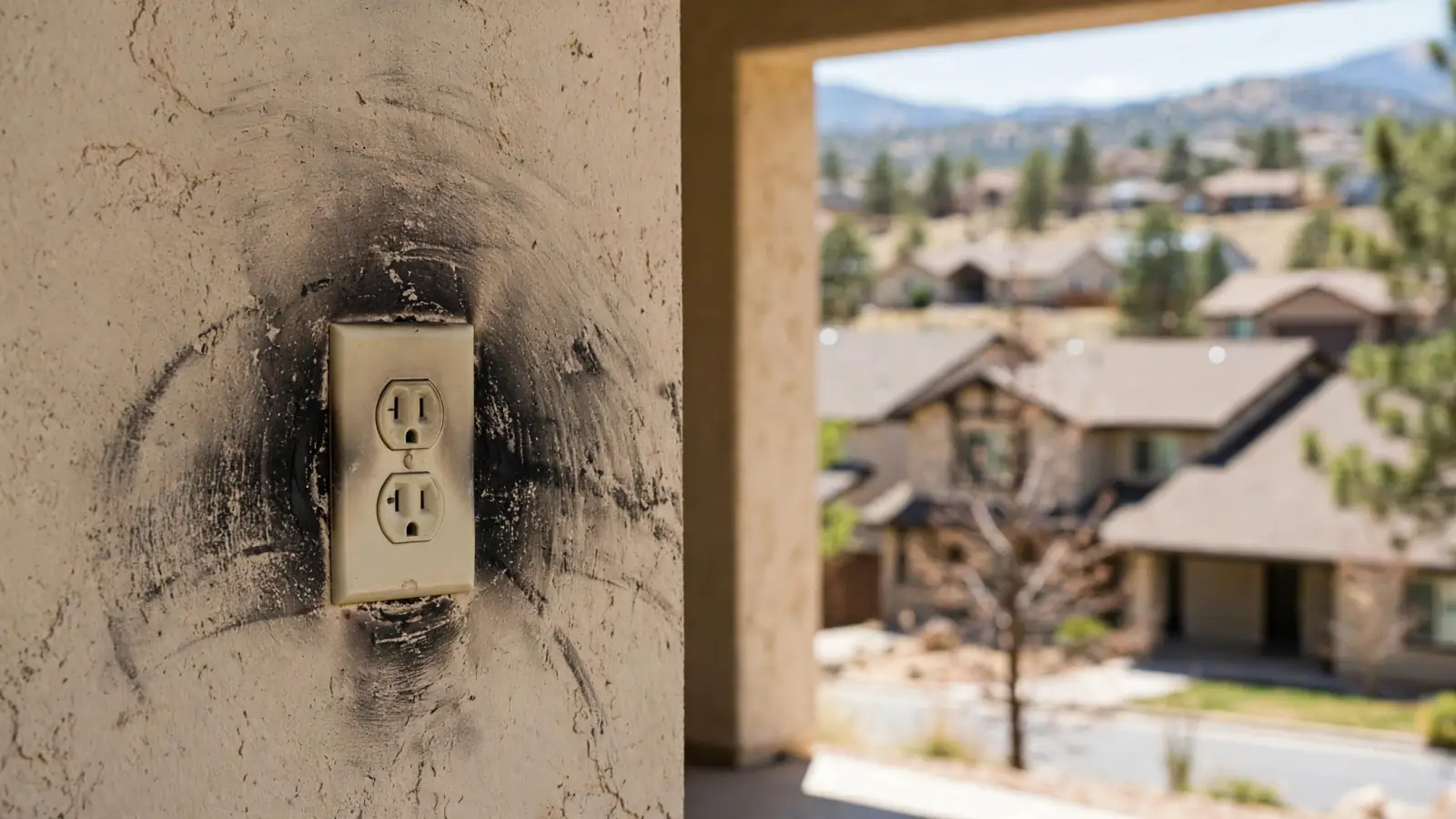
During the Waldo Canyon Fire, flames moved from house to house through Mountain Shadows, Peregrine and Oak Valley Ranch, and houses that survived next to burned lots were coated with soot and ash on the side facing the fire. The same thing can happen today if a single house or a patch of scrub oak burns. Exterior soot is usually lighter than interior soot but covers a lot of area: siding, soffits, deck boards, railings, outdoor furniture and window screens.
Wash exterior soot gently. High-pressure water can force residue into wood grain and behind siding. Low-pressure rinsing with a mild detergent, starting at the top, works on most surfaces. Anything that deformed from heat, such as vinyl trim or plastic vent covers, should be photographed for your insurer and replaced, and replacements in the wildland-urban interface may need to meet ignition-resistant standards.
Sequence
The order that keeps soot from spreading in a two-story house
- 1
Seal the stairwell and doors
Plastic barriers keep loose soot on the main floor from drifting upstairs or down to the lower level.
- 2
HEPA vacuum high areas
Soot webs and loose particles come off the vault and fan blades before anything is touched by hand.
- 3
Dry sponge top to bottom
Ceilings first, then walls, so nothing falls onto a finished surface.
- 4
Test, then wet clean
A small hidden area on each surface type is tested before detergent or solvent cleaners go on.
- 5
Seal what still shadows
Stain-blocking primer on drywall that keeps a gray cast after cleaning, then paint.
Before you start
What to leave alone until the crew arrives
The best thing a homeowner in Mountain Shadows can do for sooty surfaces is not to touch them. Keep ceiling fans off so they do not throw soot from the blades, leave stone and fabric lampshades alone, and do not run the furnace with the old filter. Photograph the vaulted ceiling, the fireplace wall and the garage from several angles before anything is cleaned; soot patterns help an adjuster understand how far the damage reached.
If the garage was the source, tell the contractor what was stored there. Damaged lithium-ion batteries from tools, bikes or vehicles can reignite and should be handled following fire department guidance, not tossed in household trash.
Fans and lights
Ceiling fans, skylights and fixtures high in the vault
Ceiling fans in tall great rooms collect a thick coat of soot on the blades and will fling it across the room the first time they spin. Skylight wells and clerestory windows trap soot in their corners, and pendant lights hold it in every crevice. Crews clean these early, from the same scaffolding used for the ceiling, so they do not re-soil finished surfaces later. Keep fans and lights switched off until then.
If heat reached the fixtures or their wiring, have an electrician check them before they are used again. Smoke alarms exposed to heavy soot are usually replaced rather than cleaned.
FAQ
Soot removal questions for Mountain Shadows homeowners
How do crews reach soot on a two-story vaulted ceiling?
With scaffolding or tall ladders set up in the great room. Ceilings are dry-sponged first so soot does not fall onto cleaned walls and floors below.
Can soot from a garage fire reach my upstairs bedroom?
Yes. In hillside houses the garage often sits under living space, and oily soot moves through doors, ceiling gaps and ducts into the rooms above.
Should I pressure-wash soot off my siding?
Use low pressure and a mild detergent. High pressure can drive soot into wood and behind siding panels.
Will soot come off my stone fireplace?
Usually, with masonry cleaners and brushes. Some very porous natural stone may keep faint shading.
Do replacement siding or vents need special materials here?
Possibly. Exterior work in the wildland-urban interface may need to meet ignition-resistant requirements, so check before ordering.
Should I run the ceiling fan to clear soot from the air?
No. The blades are coated and will throw soot across the room. Leave fans off until they are cleaned.
Can I clean light soot from a window sill myself?
Light, dry soot on a hard surface can often be lifted with a dry soot sponge and gloves. Stop if it smears.
Does soot etch window glass?
Some residues are acidic and can etch glass and metal if left for days, so windows near the fire are cleaned early.