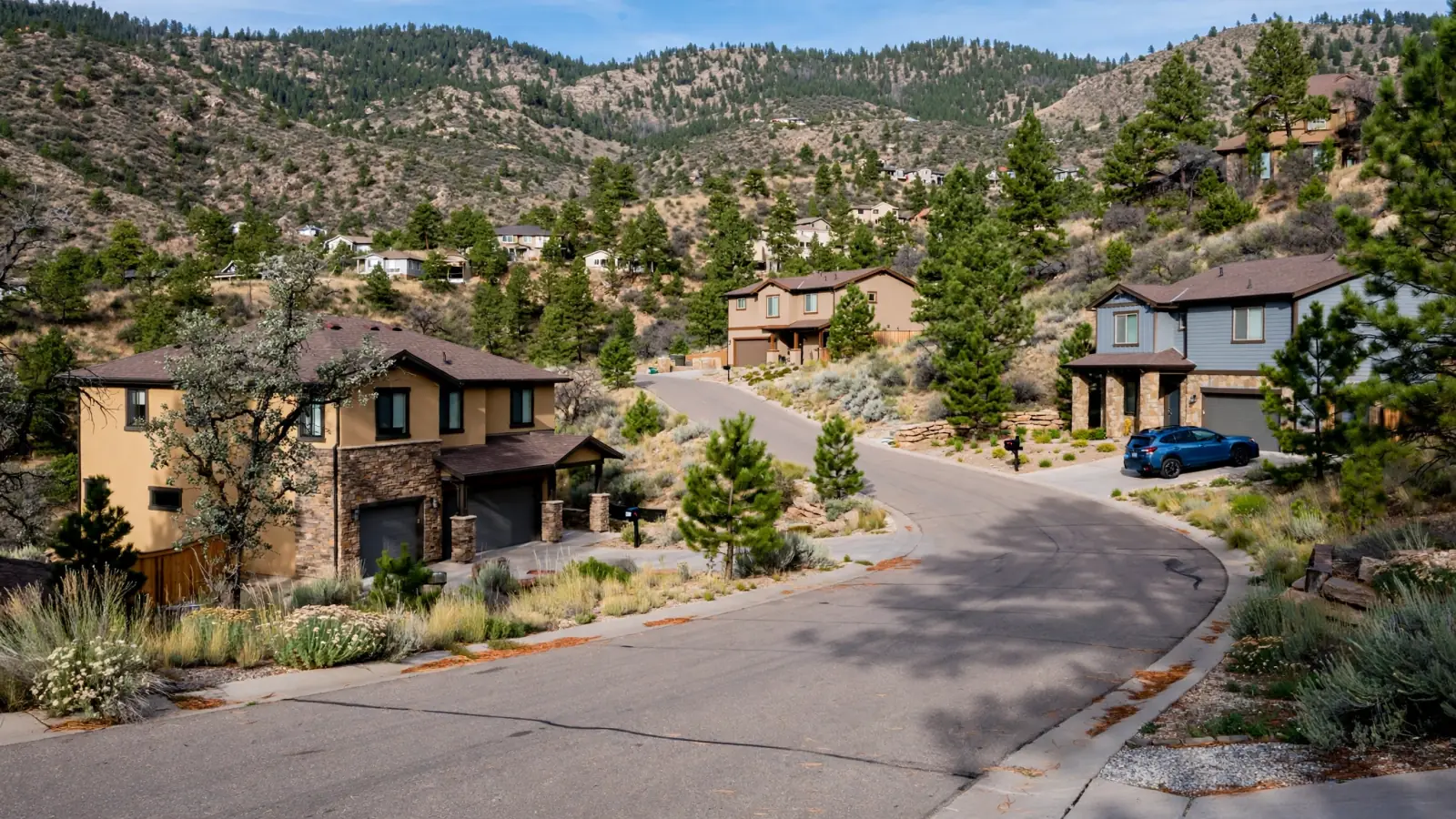
Key facts: Wildfire Smoke Damage in Mountain Shadows
- The Waldo Canyon Fire burned 18,247 acres and destroyed 346 homes, most of them in Mountain Shadows on June 26, 2012.
- More than 32,000 residents of Colorado Springs, Manitou Springs and Woodland Park were evacuated during the fire.
- The EPA advises HEPA vacuuming and damp cleaning for ash, never dry sweeping or leaf blowers.
- Attic vents, the furnace intake and gaps around doors are the main routes for smoke and ash into a closed house.
The 2012 lesson
What Waldo Canyon taught about smoke in this neighborhood
The Waldo Canyon Fire started on June 23, 2012, in the national forest west of the city. Three days later, erratic winds drove it over the ridges into Mountain Shadows, Peregrine and Oak Valley Ranch. Houses burned from embers and from each other rather than from a single wall of flame. By the time the fire was contained, it had burned 18,247 acres and destroyed 346 homes, and more than 32,000 people had been evacuated.
For every house that burned, many more were exposed. Smoke and ash drifted into attics through vents, into living spaces through gaps around doors and windows, and into ductwork through furnace intakes. Gas was shut off to about 4,200 undamaged homes. When residents returned, the work was mostly cleaning: filters, ducts, fabrics, attics and garages. That is the core of wildfire smoke damage cleanup.
Coming home
Returning to a Mountain Shadows home after a wildfire
- 1
Wait for the order to lift
Go back only when the evacuation order for your street is lifted.
- 2
Walk the outside first
Check mulch beds, wood piles, fences and the deck for smoldering spots, and look for melted vents or cracked windows.
- 3
Leave the gas to the utility
If the meter was shut off, let Colorado Springs Utilities restore it.
- 4
Change the filter before heating
Put in a new furnace filter and keep the fan off until you have checked the blower for ash.
- 5
Photograph before cleaning
Record ash on sills, the attic hatch area, the garage and any exterior heat damage.
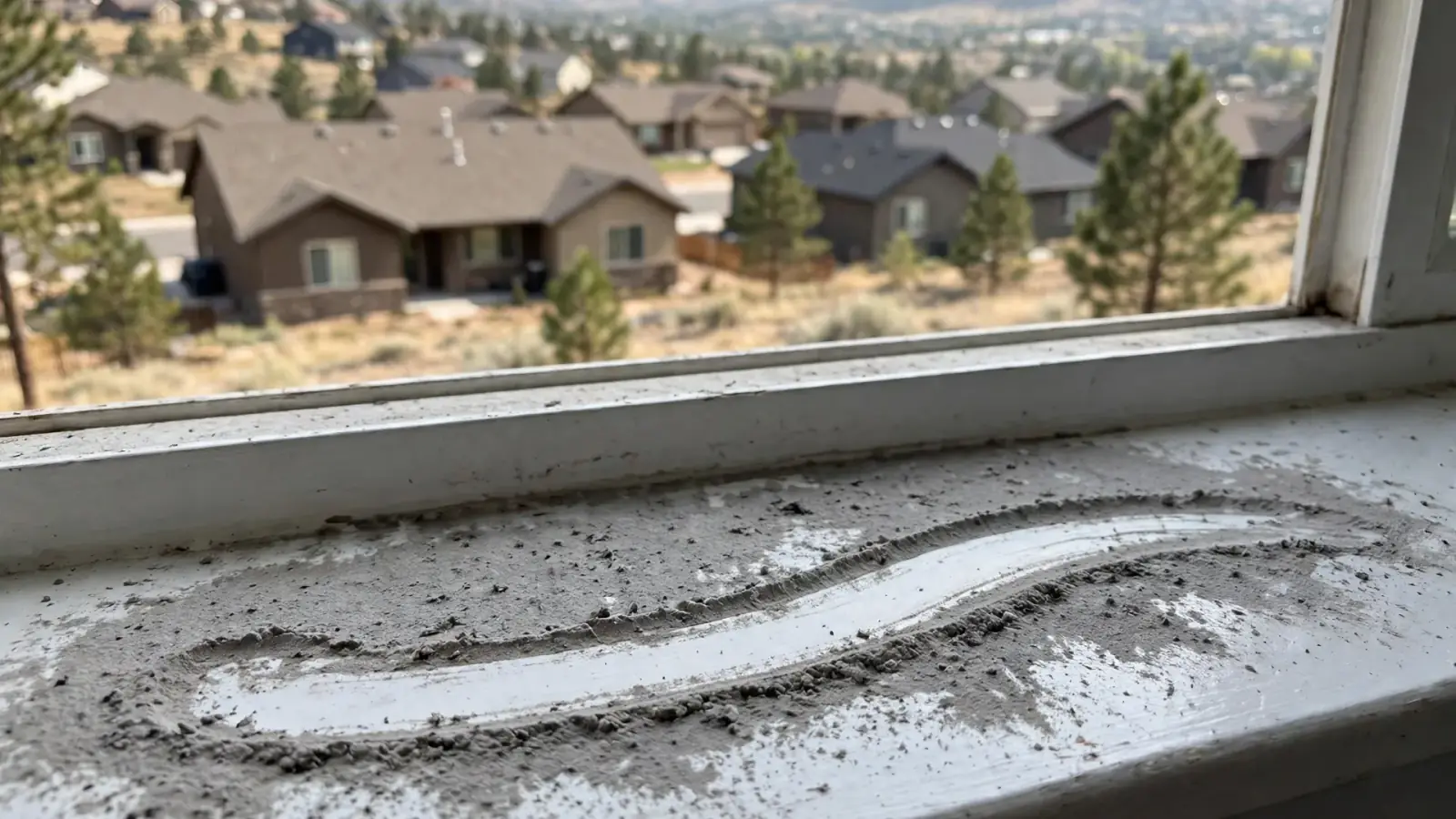
Where the ash goes
Where wildfire ash ends up in foothill homes
Attic insulation
Soffit and ridge vents let in fine ash that settles on insulation above living spaces.
Garage
Overhead doors are leaky, so garages often hold more ash than any room.
Window tracks and sills
Gray dust gathers where air leaks around sashes and sliders.
Furnace filter and returns
A filter that turned dark gray in days shows how much the system pulled in.
Cleaning
Cleaning ash without spreading it
The EPA's guidance comes down to one rule: capture ash, do not move it. That means no dry sweeping, no leaf blowers and no ordinary vacuums, which blow fine particles out of the exhaust. Use a HEPA vacuum indoors, mist decks and patios lightly before sweeping, and damp-wipe hard surfaces with a mild cleaner, changing the water often. Wear a fitted N95 respirator, gloves and long sleeves, and keep children and pets away from the work.
Fabrics usually hold most of the smell. Wash curtains, bedding and clothing in batches and send delicate items to a specialist cleaner. If ash reached the blower or returns, have the ducts cleaned before you rely on the furnace. Attic insulation with a visible layer of ash is usually removed and replaced.
Next time
Reducing smoke and ember entry before the next fire
Fuel has been building again on the slopes above Mountain Shadows since 2012. The city's wildfire mitigation unit and risk map are the place to start for your address. Fine metal mesh over attic and crawlspace vents keeps out embers and much of the ash; good weatherstripping and a closed fireplace damper help too. Keep spare high-efficiency furnace filters and a portable HEPA cleaner for a bedroom you can use as a clean room. NIST's work on wildland-urban interface fires found embers to be a major way houses ignite, so clearing debris from gutters, decks and the ground near the house also matters.
Neighbors
When the house next door burned
In 2012, many homes that survived stood beside lots where houses had burned to the foundation. Those survivors usually had more than smoke damage: heat-cracked windows, melted vinyl and vent covers, scorched siding and fences on the side facing the fire, and heavy ash from the burned structure, which can contain residues from building materials and contents rather than just vegetation. That calls for more caution during cleanup and more exterior repair afterward.
Photograph the fire-facing side of the house carefully, keep children and pets away from ash from burned buildings, and leave heavy deposits to a crew with protective equipment.
Health
Protecting sensitive family members during cleanup
Fine particles from wildfire smoke and ash can aggravate asthma, COPD and heart disease, and children breathe more air for their size. While ash is being cleaned up, it is sensible for sensitive family members to stay with friends or relatives, or at least to stay in a closed bedroom with a portable HEPA cleaner running.
FAQ
Wildfire smoke questions from Mountain Shadows
Is Mountain Shadows still at wildfire risk after 2012?
Yes. Vegetation on the slopes has regrown, and the neighborhood remains inside the city's wildland-urban interface.
How did smoke get into my house if it never burned?
Through attic vents, gaps around doors and windows, and the furnace intake. Wind pressure on the side facing the fire pushes more in.
Can I clean wildfire ash myself?
Light ash can be handled with a HEPA vacuum, damp cloths, an N95 respirator and gloves. Ash in ducts or heavy ash in the attic is better left to a contractor.
Do I need to replace attic insulation after wildfire smoke?
If there is a visible layer of ash on it, replacement is usually more reliable than cleaning.
When can I run the furnace after a nearby fire?
After you replace the filter and confirm there is no ash in the blower or returns.
Is ash from a burned house more hazardous than wildfire ash?
It can be, because it may carry residues from building materials and household contents. Handle it with more caution and keep children and pets away.
Should kids stay home during wildfire ash cleanup?
It is better for children to be elsewhere, or in a closed room with HEPA filtration, until the ash is cleaned up.
How long does wildfire smoke cleanup take in a Mountain Shadows home?
Light ash and odor can take a few days; ducts, attic insulation and a lot of fabrics can stretch it to a couple of weeks.
Should I keep windows closed after the fire is out?
Keep them closed until outdoor air is clear, then ventilate on a clean, still day.